

DIVING CERTIFIED

INTERNET CONNECTIVITY ON ALL OUR CRUISES
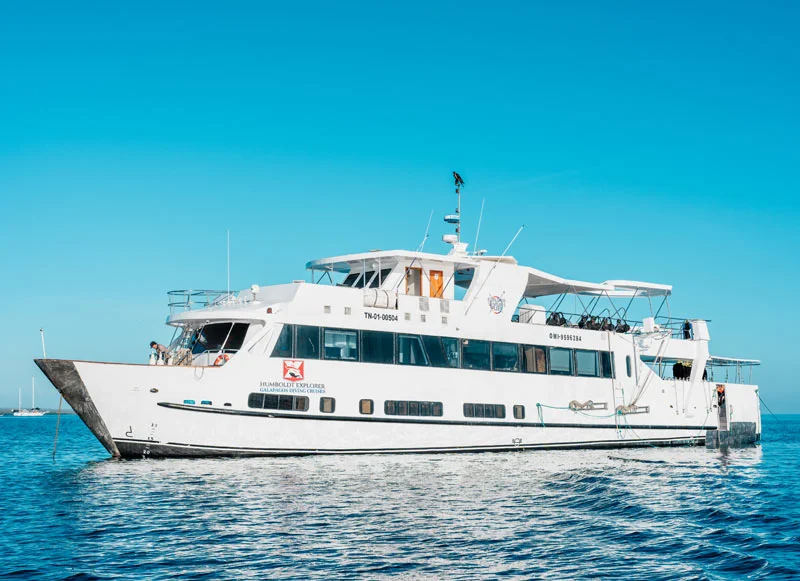
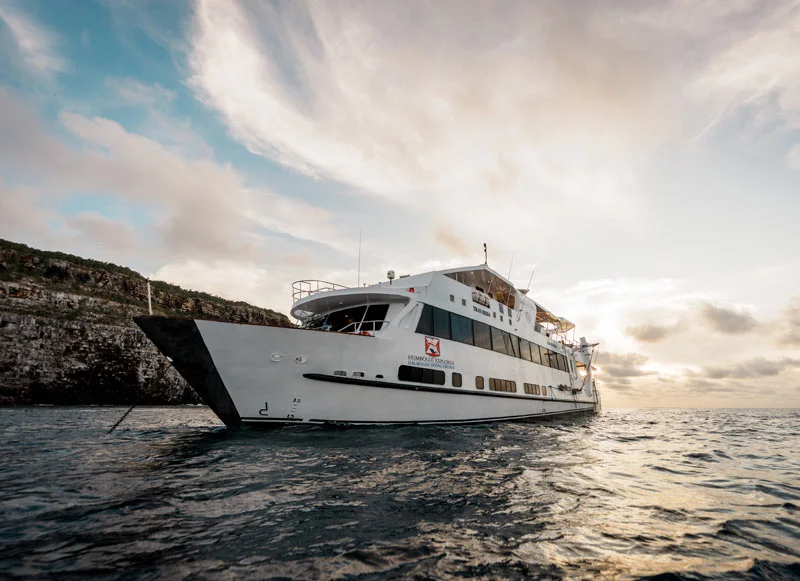


This vessel has been certified by Green Fins as an eco-liveaboard and PADI Eco-Center. Green Fins Certified Members are operators who have committed to following the Green Fins Code of Conduct and have achieved a minimum standard of environmental performance during their annual assessments.


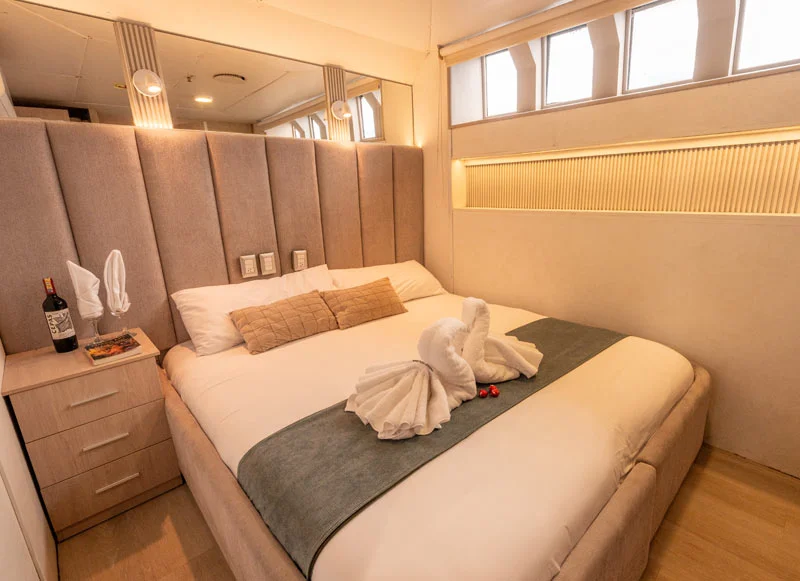
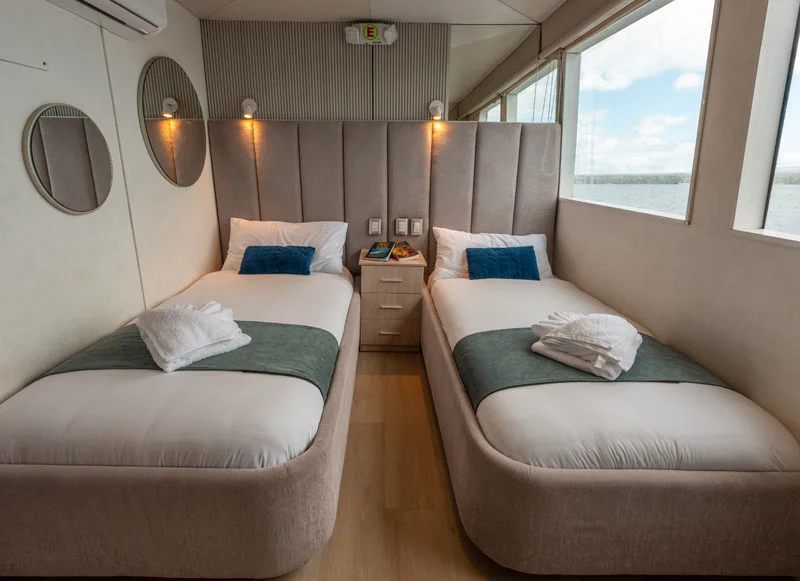
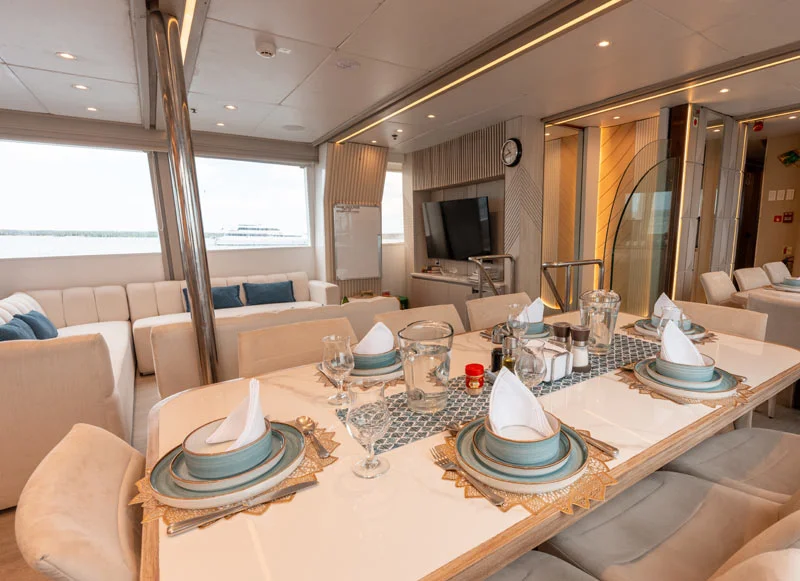
The Humboldt Explorer is a first-class Galapagos liveaboard, accommodating 16 passengers in 8 air-conditioned rooms, all of which have private bath and shower facilities.
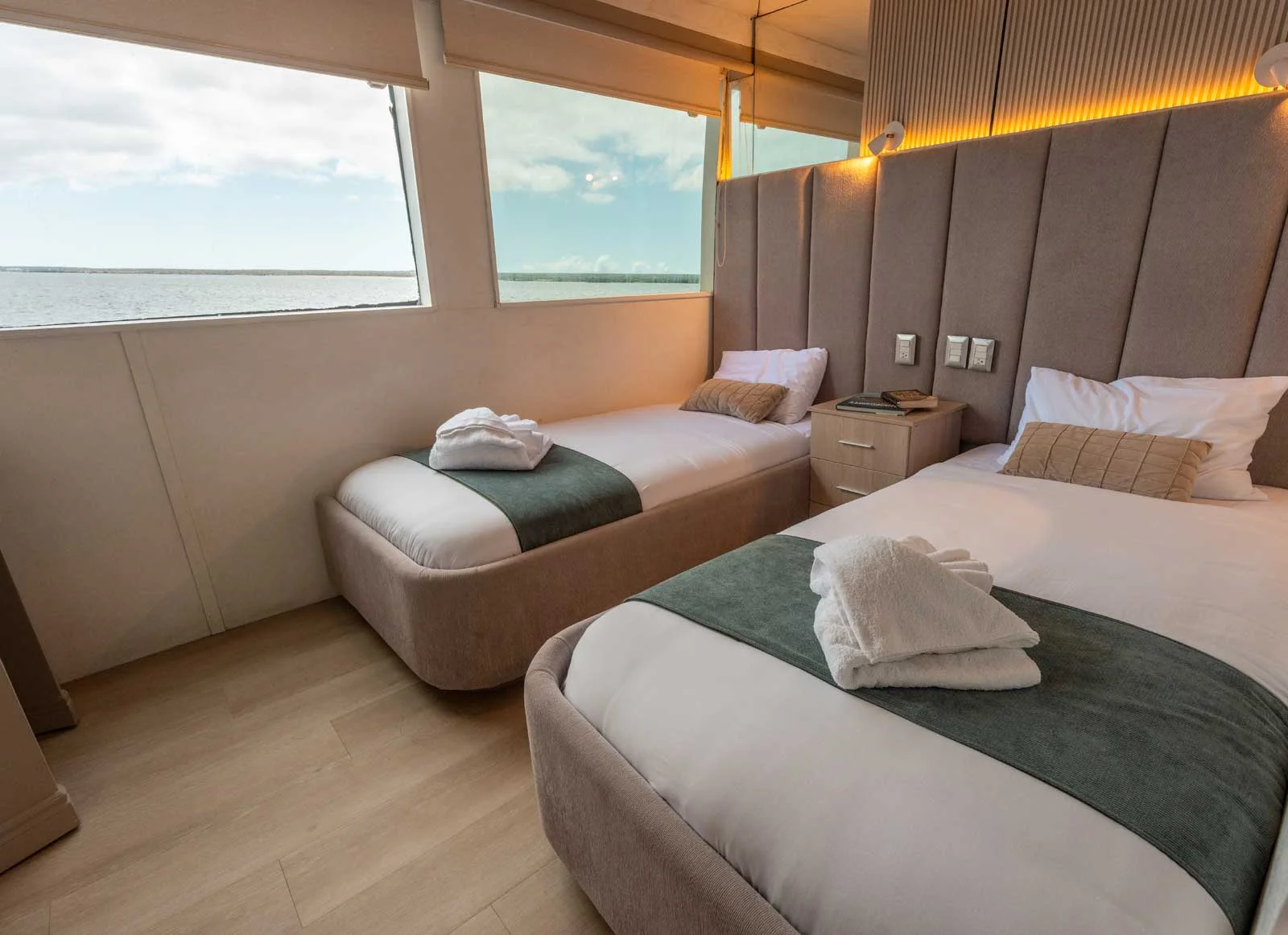
Most cabins can be arranged to provide two twin beds or one large bed depending on guest needs. Cabins are located on the main and lower decks.
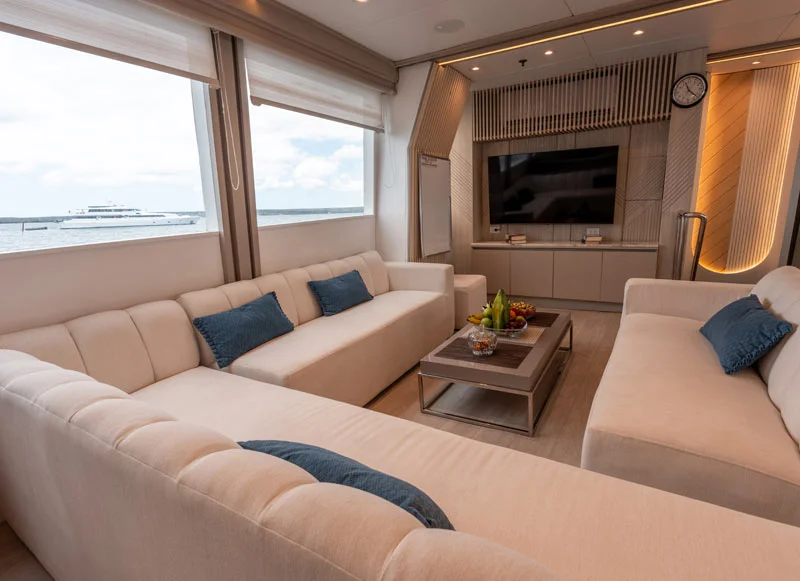
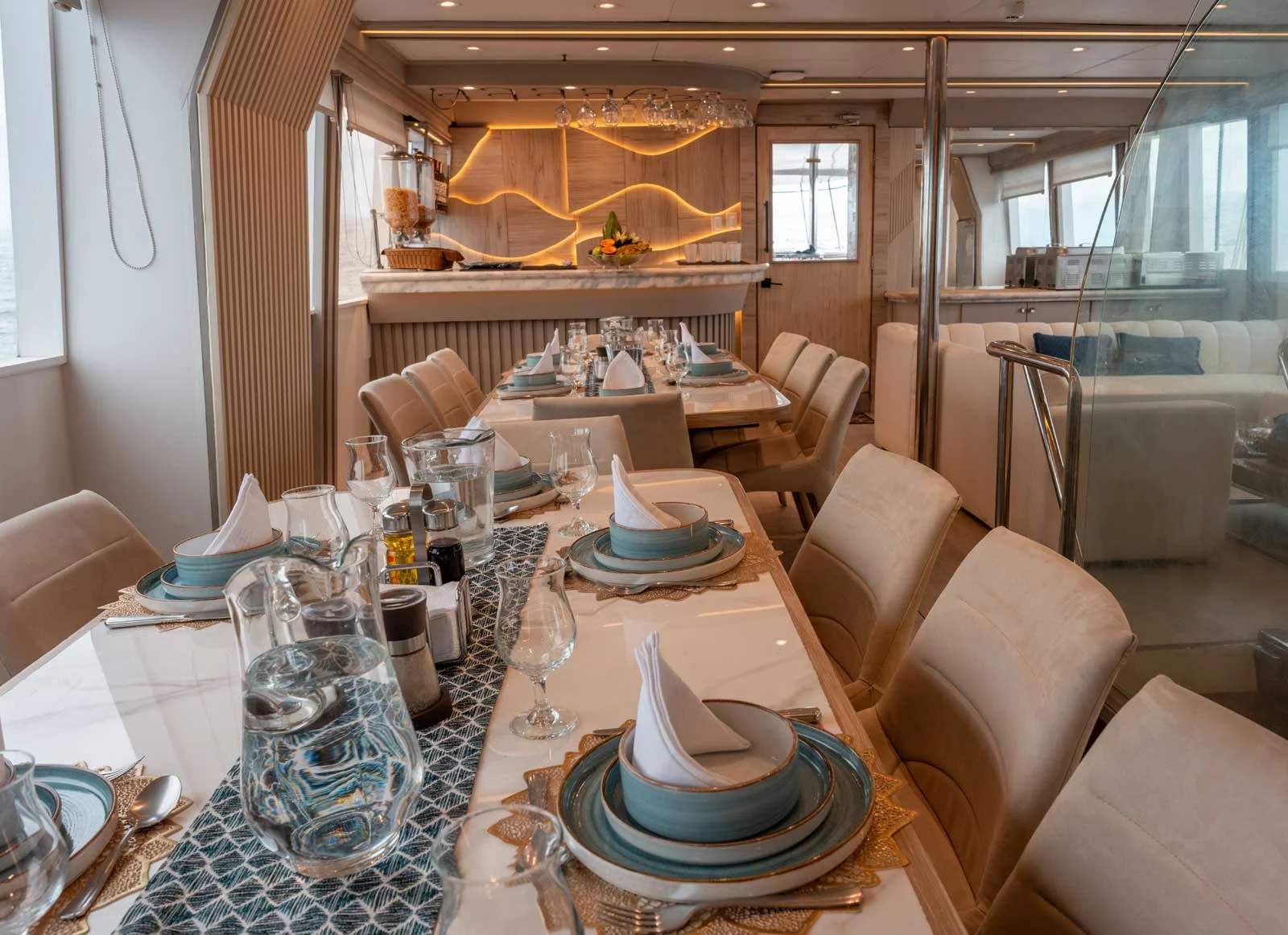
The air-conditioned salon on the main deck includes dining tables, Bar and TV/lounge area, video library and lounge area. A partially covered sundeck with jacuzzi and ample seating areas is located on the top level.
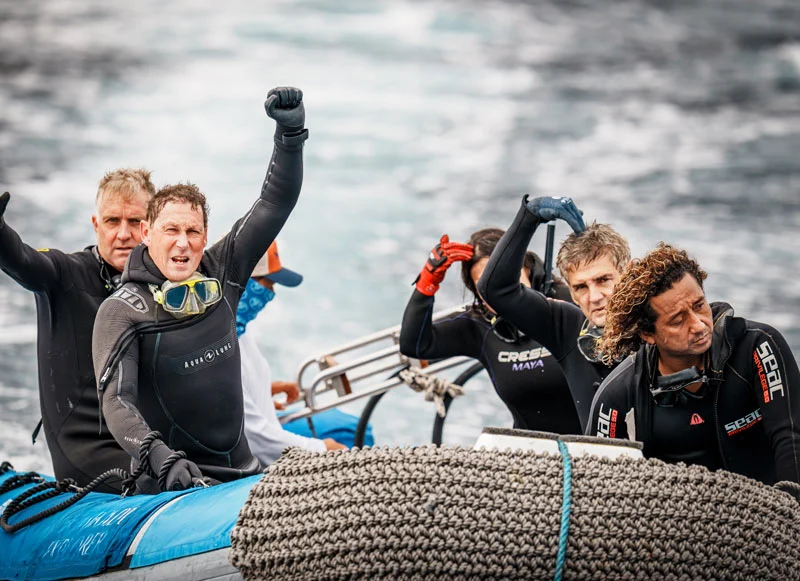
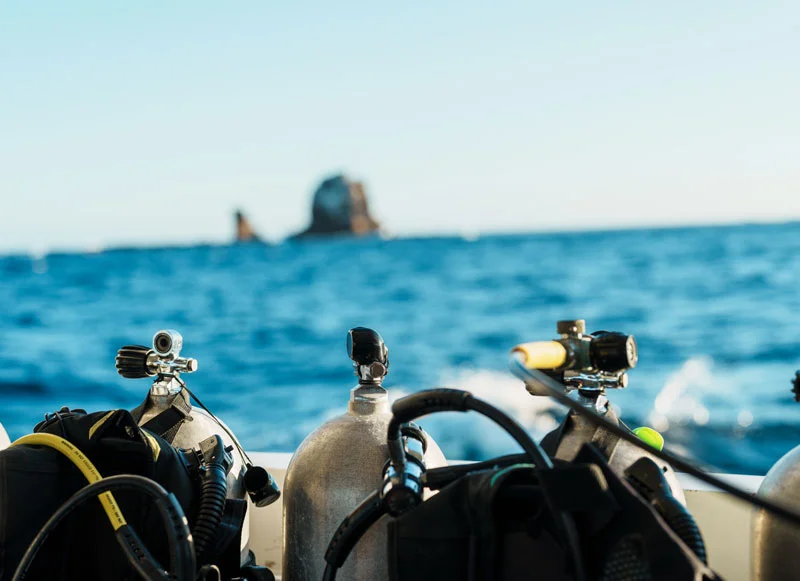
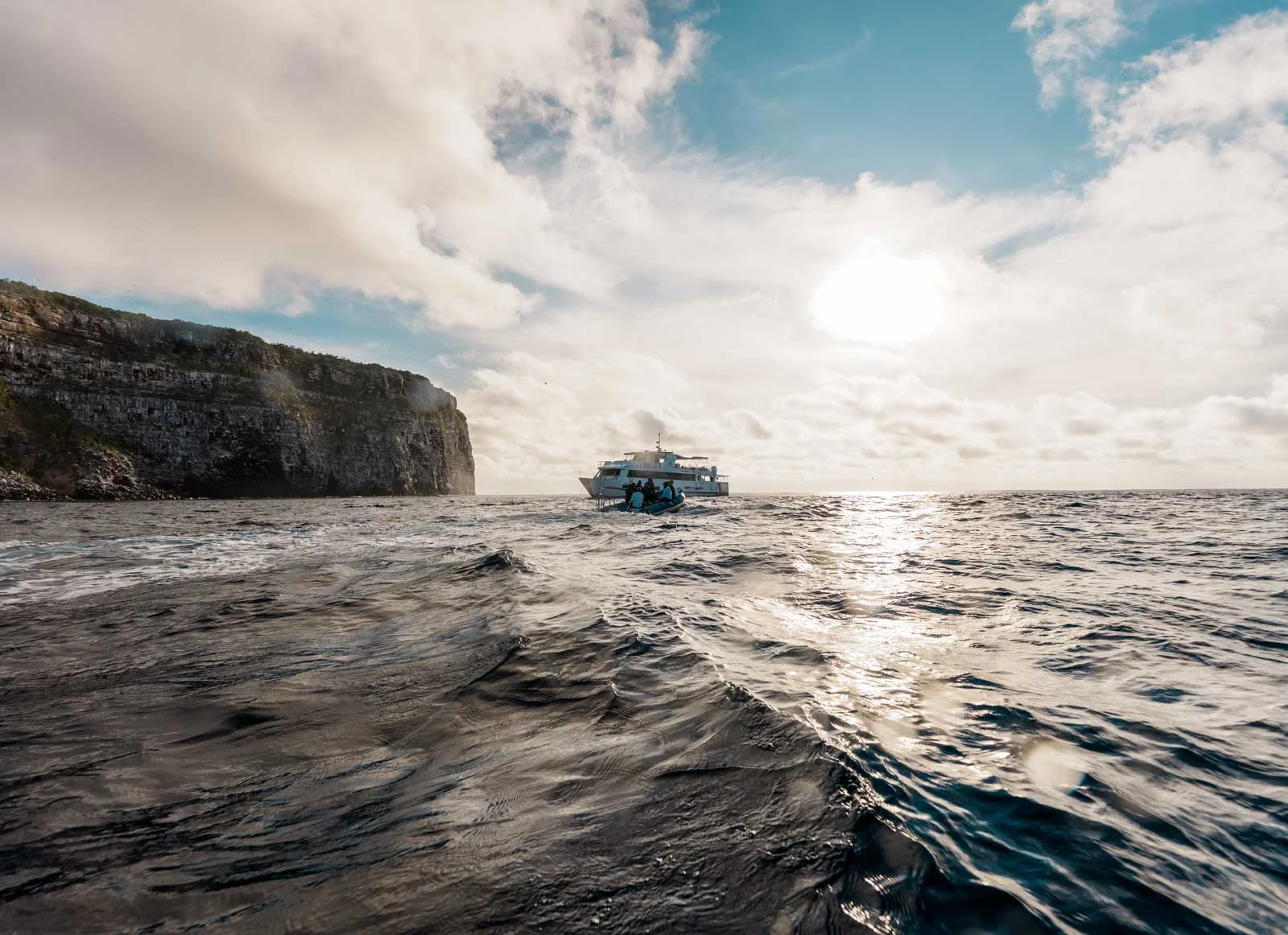
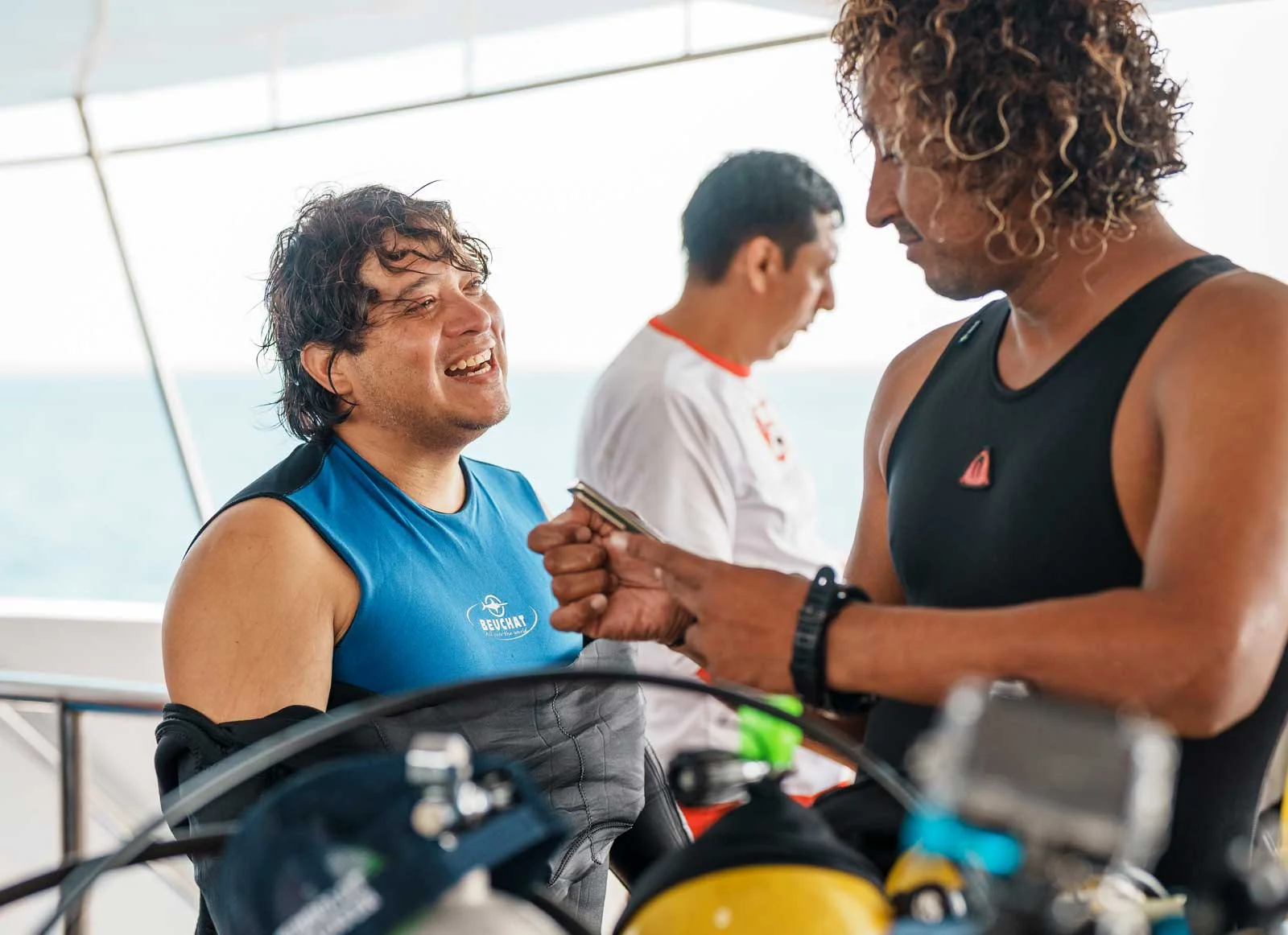
The dive deck is equipped with individual gear bins, large camera table, recharging station, air and nitrox filling stations, tank racks, and a separate fresh water rinse tank for underwater camera equipment. Diving operations are conducted from two large pangas (tenders), easily boarded from the dive deck.
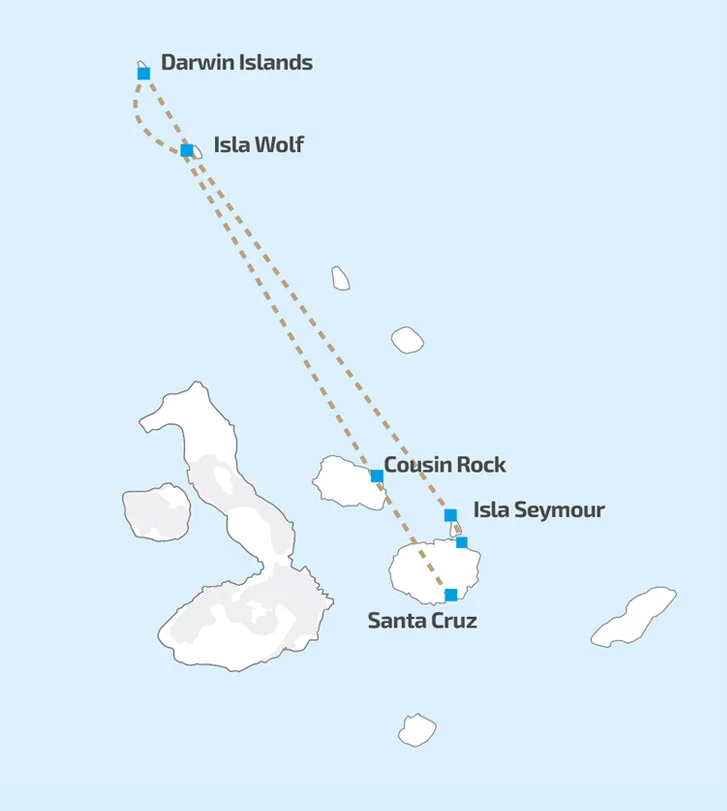
Every departure runs a seven-night itinerary built around Darwin and Wolf — the Galapagos’ greatest dive sites.

Registry: Pto Baquerizo Moreno, Galapagos Islands
Length overall: 111.5 ft (34 meters)
Beam: 21.3 ft (6.5 meters)
Draft: 8.2 ft (2.5 meters)
Tonnage: 169 ITC
Main engines: Detroit Diesel 6V92, 350 hp
Generators: 2x Perkins 73 kw
Maximum Speed: 10 knots
Fuel Capacity: 5,300 gallons (20,000 liters)
Range: 1,800 nm
Accommodations: 16 passengers in 8 air-conditioned rooms on main and lower decks, all with private bathrooms and showers. All rooms except rooms 3 & 4 (forward below deck) can be converted to either one queen bed or two twin beds. Up to 7 crew and 2 guides in crews’ quarters.
Safety Equipment: Life rafts (2), life rings/strobes, life vests/strobes, emergency position locator, flares, oxygen and first aid equipment
Air Systems:2 electric Bauer compressors with nitrox membrane, producing 32% nitrox, bank storage
Tenders: Rigid hull inflatables (2), used for passenger transport and diver pickup
Accessories: Diving Equipment
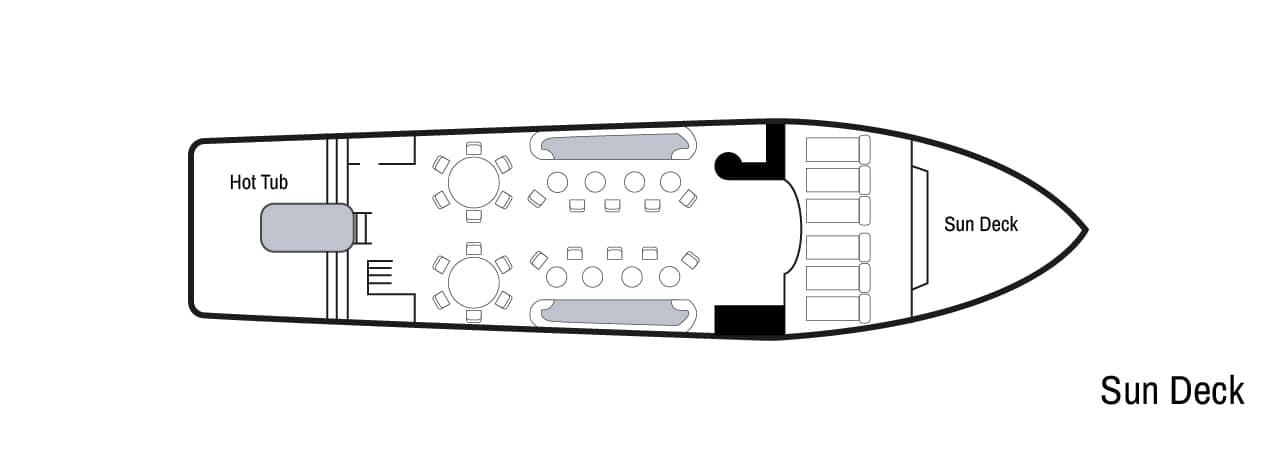
The Sun Deck features a large lounge area, the partially covered sun deck and a hot tub with ample seating.
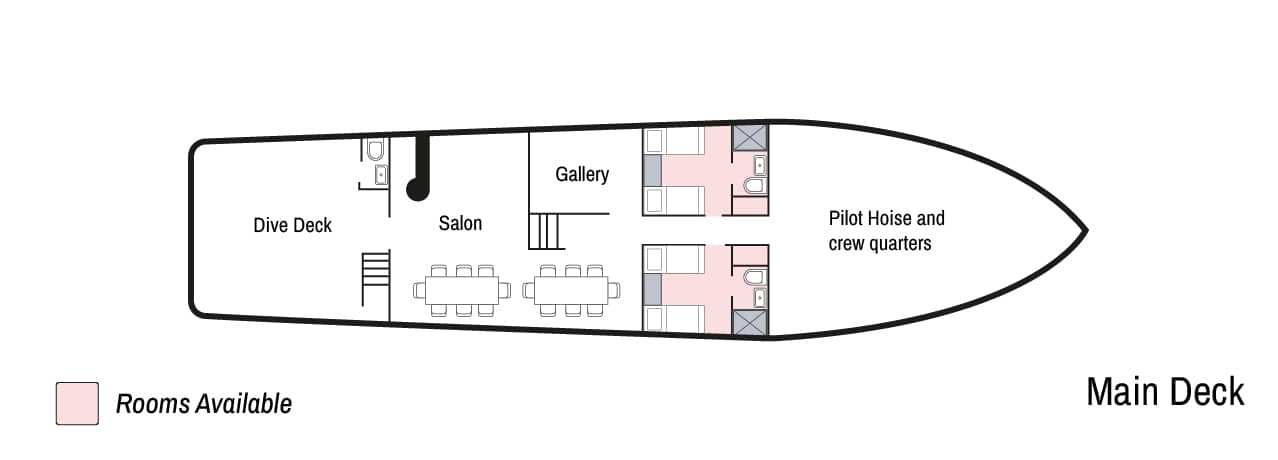
The Main Deck features two guest cabins, 1 & 2, each with private bath and shower, 1 queen or 2 twin beds, television, ample storage and provides guests with an ocean view; the dining area and large dive deck.
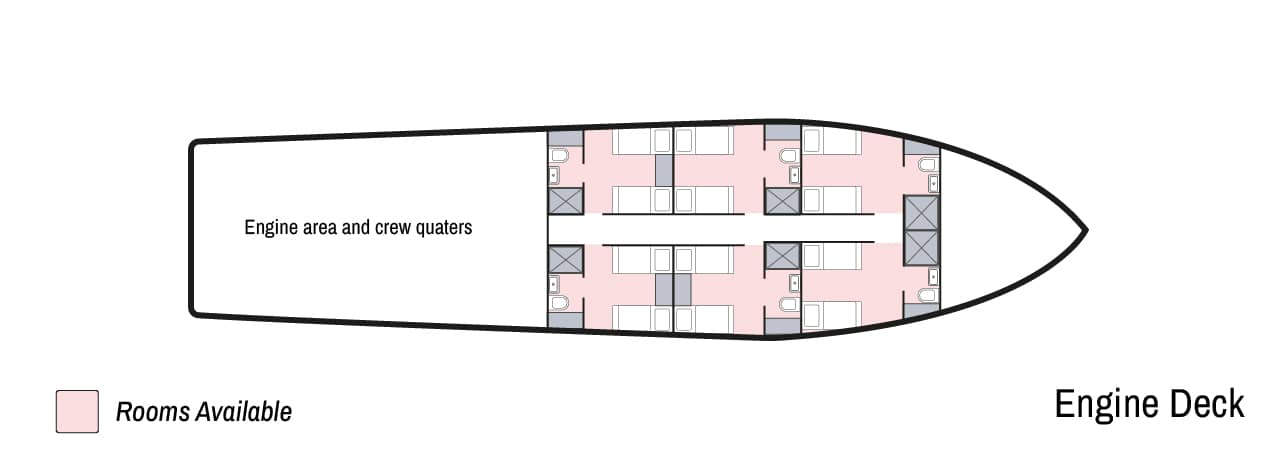
The Lower Deck comprises six cabins, 3-8, each with private bath and shower, television, window and ample storage. Cabins 3 & 4 have twin beds only. Cabins 5,6,7 & 8 have 2 twin beds or 1 queen bed.
Rebreather diving is not permitted onboard. Recreational single tank side mount diving is allowed and divers must bring all necessary riggings, as those are not available for rent. Please contact us for details.
The Humboldt Explorer comfortably accommodates 16 passengers in 8 air-conditioned rooms, all of which have private bath and shower facilities. Most cabins can be arranged to provide two twin beds or one large bed depending on guest needs. All cabins have flat screen televisions and windows to maximize the view of the Pacific Ocean and Galapagos Archipelago. Cabins are located on the main and lower decks. The air-conditioned salon on the main deck includes dining tables, TV, CD/DVD, video library and lounge area. A partially covered sundeck with jacuzzi and ample seating areas is located on the top level. The dive deck is equipped with individual gear bins, large camera table, recharging station, air and nitrox filling stations, tank racks, and a separate fresh water rinse tank for underwater camera equipment. Diving operations are conducted from two large pangas (tenders), easily boarded from the dive deck. The Humboldt Explorer is equipped with a wireless signal that will allow communication via WhatsApp. Cell phone service is available when in proximity to Santa Cruz Island if your phone is so equipped. The vessel’s location does determine the reliability of access to these services. A satellite phone is available for emergency use.
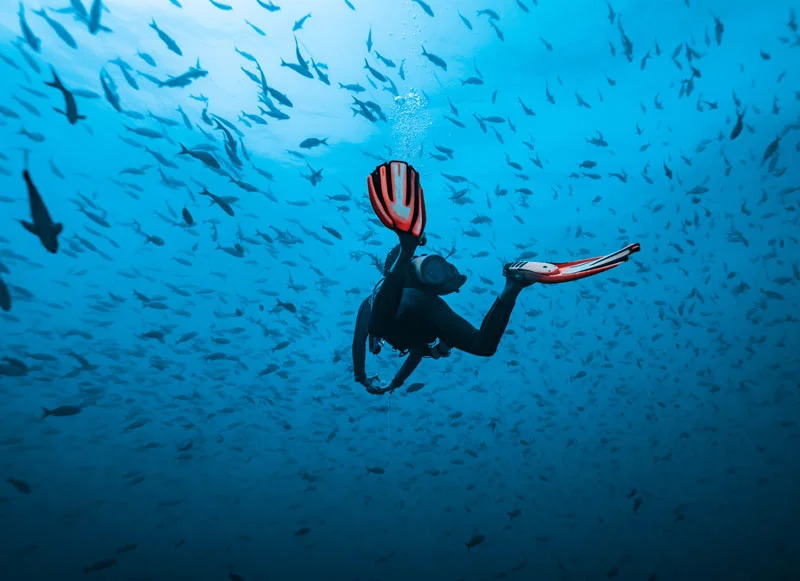
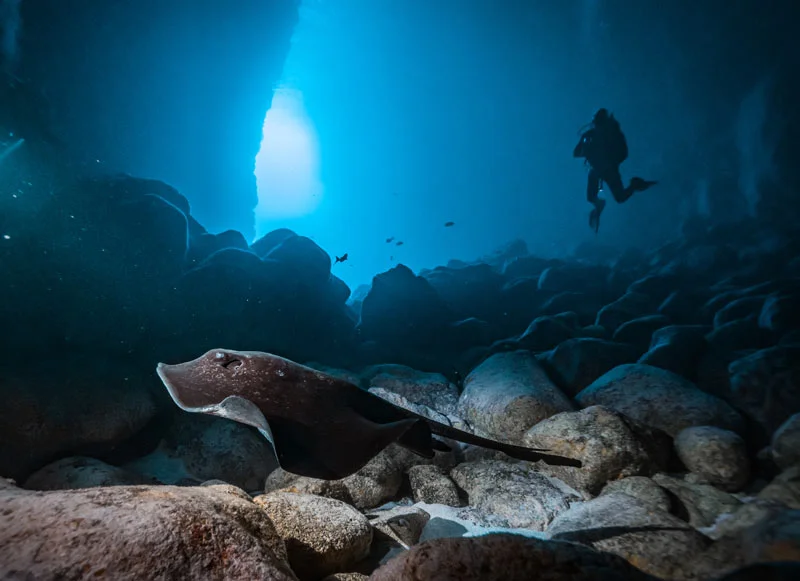
Galapagos is famous for huge schools of hammerheads, but there is more to Galapagos than just its schooling sharks. You will be diving in a protected and healthy marine environment with an abundance of rare species including Galapagos sharks, whale sharks, mantas, mobulas, eagle rays, stingrays, penguins, orcas, dolphins, mola mola, marine iguanas, turtles, sea lions, butterflyfish, tuna, and pufferfish among many others. Galapagos has two seasons. High season is regarded as July to November when the Humboldt current is at is maximum force, bringing upwellings of nutrients from the cold depths. This is your best opportunity to dive with whale sharks in Darwin and Wolf. In these months, the water is cooler, visibility is lower, currents can be stronger and the seas can be rough at times. The air temperature is cooler and evenings can be fresh. The chances of seeing whale sharks are slim during the low season months of December through June. Other popular species, such as the scalloped hammerheads and large schools of fish are present year-round however, making the “low” season desirable if whale sharks are not on your must-see list. Temperatures are warmer and visibility is generally better. Galapagos is a cold-water destination. Regular temperatures in Darwin and Wolf are 21-23°C (70-74°F) but can be warmer in the early months of the year.
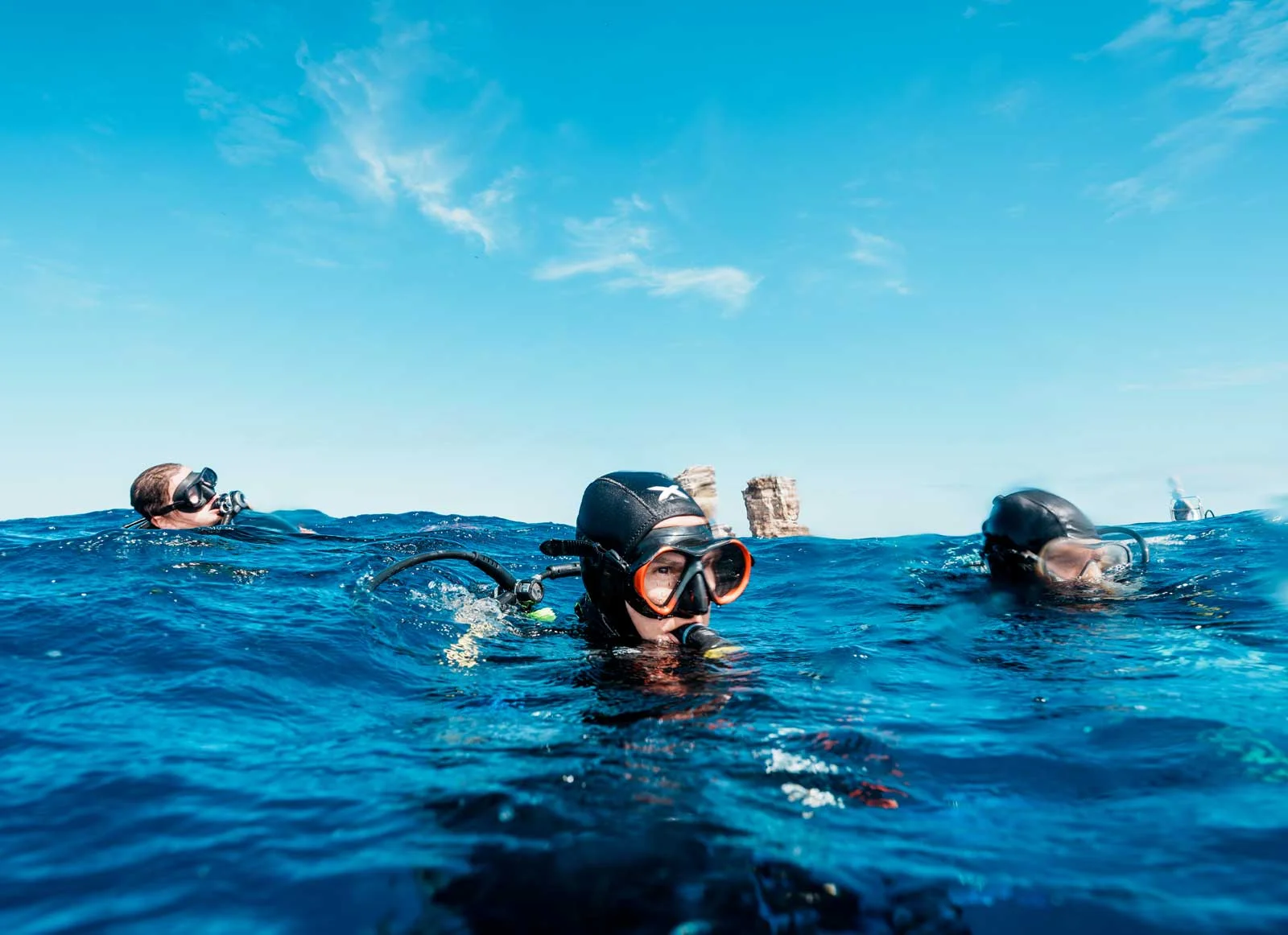
All dives aboard the Humboldt Explorer are offered at scheduled times, up to 4 times daily (weather & itinerary permitting). Schedules must comply with Galapagos National Park rules, allow for adequate surface intervals and enable the vessel to travel to different locations. Please note that Galapagos regulations limit the maximum depth for all dives to 130 feet (39 meters) with air and 110 feet (33 meters) with Nitrox. We usually do not dive deeper than 100 feet (30 meters). All dives are done from pangas (zodiacs).
The minimum certifiable age for divers is 10 for most SCUBA certification agencies; normally, the agencies restrict 10 and 11-year olds to a maximum depth of 40 feet (12 meters). Children 12-14 years old are restricted to 70 feet (21 meters). Explorer Ventures Fleet therefore allows children as young as 10 years to participate in our trips, with the following restrictions:
All children under the age of 15 must travel and dive with their parent or guardian, unless undergoing active training with an instructor. Minors must be accompanied onboard by a guardian at all times.
This itinerary offers no diving opportunities at depths less than 40 feet; diving opportunities for 10 and 11-year olds are not available on this itinerary, and 12-14-year olds will not be able to dive all sites. For this reason, a minimum age of 15 for divers is strongly suggested.
A parent/legal guardian will be required to sign the liability release on behalf of a child under the age of 18.
To ensure your safety, we require the following of all divers:
All divers must be certified as open water scuba divers by an internationally recognized certification organization.
All divers must be experienced divers (we recommend that you have more than 100 logged dives) and have logged at least one dive within the 6 months prior to boarding the vessel. Dives are very often at an advanced level. Currents can be very strong and often divers are required to swim against them.
All dives are guided by an instructor/naturalist guide and due to Galapagos National Park regulations all divers must dive with the guide at all times.
All divers must log in and out of the water with a member of the diving staff.
All divers must have a submersible console. In addition, a timepiece must be worn by at least one diver in a buddy team. Dive computers are required.
Decompression and solo diving are not allowed under any conditions. The maximum allowed depth is 130’ (110’ on nitrox).
Diving activities must cease when the consumption of alcohol begins.
All divers must present proof of dive accident insurance per Galapagos National Park regulations.
All divers must also carry a DiveAlert, a surface signaling device, and an electronic beacon while diving (all available on board). Guests are responsible for all items they borrow from the vessel.
Please note that due to a combination of staff and equipment logistics, insurance requirements and local diving regulations, neither rebreathers nor diver propulsion vehicles (DPVs) may be used aboard Explorer Ventures Fleet vessels.
Please note that flash photography is not permitted while taking photos of wildlife on land. Professional photography and videos recorded for commercial purposes must be authorized by the Galapagos National Park Directorate. Drones are not permitted in the Galapagos.
The vessel provides tanks, weights, and weight belts for your use. If you prefer to rent the rest of your equipment from us, we have all of the equipment that you will need. Please indicate on your application form what equipment (and size) you will require. Otherwise, the following items are the diver’s responsibility:
* Available for rent on board.
| Diving Equipment Rental Prices Per Person Per Week | |
|---|---|
| Full Scuba Package - BCD, Regulator, Console, wetsuit (does not include computer) | $ 250 |
| Regulator Package with gauges, octopus and inflator | $ 90 |
| Computer | $ 100 |
| BCD | $ 90 |
| Full Body Wetsuit | $ 75 (7mm) |
| Mask & Snorkel | $ 25 |
| Fins/booties | $ 50 |
| DIN/Yoke Adaptor (limited availability) | $ 25 |
| 15 Liters Tank | $ 130 |
| Nitrox fills | $ 150 per week |
Most of our guests bring their own complete set of dive gear. This is the ideal situation; however, due to weight limits or additional travel plans, some of our guests choose to rent gear. We strongly recommend that you bring your own mask, gloves, booties, fins, hood or hooded vest and computer. A personal wetsuit is also a good idea if you have space. Diving in Galapagos can be challenging, and it is important that you are comfortable. Gloves are suggested as the rocks can be sharp and can damage hands
Nitrox is available for an additional charge, as long as the diver is Nitrox Certified.
Nitrox is simply air in which the percentage of oxygen has been increased beyond the 21% normally found in air. Nitrox is created either through the addition of pure oxygen to the mixture, or the subtraction of nitrogen with a membrane system. On our vessels, we use the latter system.
Nitrox diving has many advantages: absorption of less nitrogen into the bloodstream and body tissues, reduced risk of decompression illness for equivalent profiles, and less post-dive fatigue (especially useful on liveaboards!). As with any diving activity, however, diving with nitrox demands careful attention and a special certification.
Enriched air certifications are an excellent chance to improve your skills and knowledge, and takes only about 4 hours of your time, in between dives. No special equipment is required, since we only dive with nitrox mixtures containing less than 40% oxygen. Just ask a dive staff member, and he or she will be happy to help!
Packing for a liveaboard trip is much easier than packing for a land-based vacation. The climate doesn’t require much more than shorts, T-shirts, and swimsuits, though at sea the winds can be cold and jackets are often necessary. Sunglasses, a visor/hat, raincoat, lightweight sweater or jacket, long sleeved shirt, backpack, tevas (or similar) are recommended. Soft luggage is also recommended as it takes up very little space when empty. Guests traveling through Quito who are interested in day tours may wish to bring some items of clothing for slightly cooler temperatures and good walking shoes. Please remember that the Galapagos Islands straddle the Equator, and the sun can be very strong at times. For this reason, please make sure you have sufficient strength environmentally friendly sunscreen. In case of rough weather or if you have a tendency towards seasickness, come prepared with motion sickness medications or Transderm patches from your doctor. If you have favorite CD’s or DVD’s, feel free to bring them. All linens (including sheets, comforters, bath towels, hand towels, dive towels, and wash cloths) are provided on board. Hairdryers are not available on board. If possible, pack your regulator, dive computer, mask, swimsuit, change of clothes, medications and toiletries in your carry-on bag. Having these few items with you will make an unexpected luggage delay far more bearable. There is a checked luggage limit of one bag up to 50 pounds (23 kilos) for flights between Quito and/or Guayaquil and the Galapagos. An additional fee of up to $50* will be charged for the second bag or overweight luggage. In addition, passengers are allowed a carry-on bag weighing no more than 17.6 pounds (8 kilos) and a personal item. All additional luggage fees must be paid in cash at flight time. (*Prices could change at any time.) Groups and individuals that book hotel and transfers with Explorer Ventures will be assisted by a representative at the airport for check-in and are less likely to be charged additional fees.
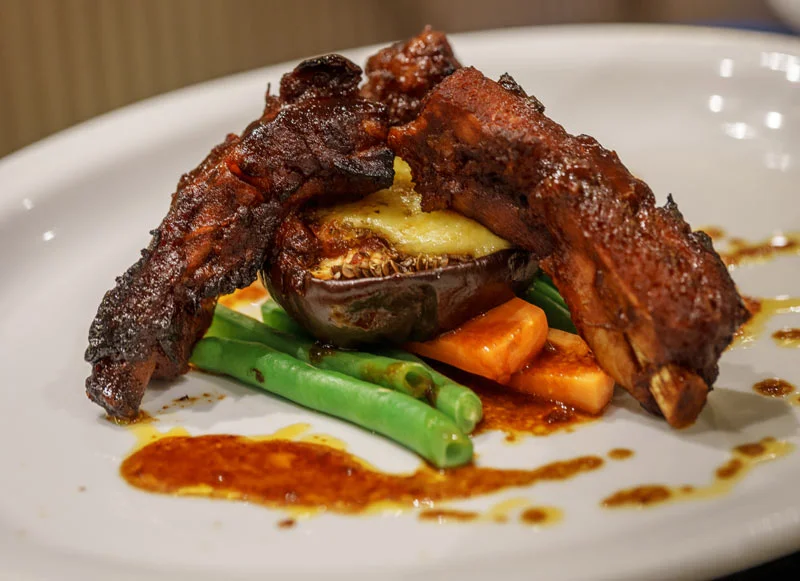
Aboard the Humboldt Explorer, lunch and evening meals usually consist of salad, potatoes, rice, chicken, beef, pork, and fish. Breakfast is the usual fare of eggs, cereal, toast and fresh fruit. If you have any dietary restrictions or requests, please indicate so on your application form. Please note that specific brands of soft drinks, dressings and foods are often unavailable in the islands, and it can be very difficult for us to find low-fat or soy products and other items common elsewhere. While we will do our best to accommodate your requests, please be realistic and consider bringing some of your own items if the lack thereof may constitute a health risk or seriously compromise the enjoyment of your holiday
Outgoing calls may be made from the vessel via satellite phone. Please be aware that a charge is assessed for both incoming and outgoing calls.
The U.S. dollar is the official currency of Ecuador; therefore, it is not necessary to purchase currency before arriving. Most major credit cards are accepted widely when shopping ashore, however, additional fees are charged in Ecuador for their use.
Though all meals, most beverages, transportation within the Galapagos, and much more is included in your trip payment, there are additional items which you may charge to your on-board bill. These include retail items (shirts, etc.), scuba instruction, rentals, nitrox, premium alcoholic beverages, incoming and outgoing telephone calls, and crew gratuities. Other required fees include:
Chamber Support Fee: $35 per person
Upon entry to the Galapagos Islands: Per person cash payments of $200 Galapagos National Park fee and $20 Tourist Card.
Fuel tax
Bills will be settled onboard on Sunday morning. Accumulated charges may be paid using cash, Visa, or MasterCard. American Express, travelers checks and personal checks are not accepted on board, and we are unable to advance cash on credit card charges. (Travelers checks are not accepted in Ecuador nor can they easily be changed into cash.) US Dollars larger than $20 are not accepted onboard, in all businesses or at local banks. Credit cards are subject to the 12% VAT plus 5% in bank fees. These charges can be avoided by using cash for onboard charges. ATM machines are available in Quito, Guayaquil and Puerto Ayora.
Crew gratuities are not included in your package. The crew works very hard, 7 days a week and many weeks at a stretch to provide the best possible service for our guests. The industry standard for crew gratuities on dive trips is between 10% and 15% of the regular package price per passenger (if, of course, you are happy with the service which you have received). Your generosity is greatly appreciated!
First a note about having a current Passport: Passports with a minimum of 6 months remaining before the expiration date are required for all arriving foreign nationals. If in doubt about visas, contact the Ecuadorian Consulate for specific requirements from your country. Transfers between airport (Baltra/GPS) and vessel for same day arrivals & departures are included. Guides will depart Baltra airport about 01:00pm. If you are arriving early and staying on Santa Cruz island or arriving from another island, please meet the Tiburon Explorer or Humboldt Explorer at the airport arrival area in Baltra at 11:30am. If you miss any of your flights and are not able to make it to Ecuador or the Galapagos on schedule, please contact Galasam, our Ecuadorian partner, at 593997031382 Notify them of your updated arrival time and where you may be reached in the meantime. The vessel will leave port on Monday at approximately 2:00pm. Retrieving lost luggage after the vessel departs on charter is impossible. It can be retrieved when the vessel returns to port at the end of the charter. The vessel arrives at its final destination port on Monday morning. The Sunday evening meal is on the island and is not included in the price of the trip. Transportation is organized and included for transfer to the airport. The departure tax from Quito and Guayaquil is now included in international flight prices. Please note: Flight times, prices and the Galapagos airport of arrival are all subject to change with little or no notification, and flights often run late. We strongly encourage our guests to plan on arriving at least one and preferably two days prior to your flight to the Galapagos Islands, to ensure that your luggage is with you or to make up for any travel delays. We also recommend that guests plan on an extra night in Quito or Guayaquil before departing Ecuador. The earliest time a guest can reliably expect to connect to another flight is 5 pm on the last Saturday of the trip from Guayaquil or 7 pm from Quito. Ticket holders are required to check-in a minimum of three hours prior to flight time for all international departures, even when connecting from a Latam, Avianca or Equair flight. If you are booking your own domestic flights, the Humboldt Explorer departs from Baltra (GPS), not San Cristobal. Passengers flying into San Cristobal must arrange their own transportation to Baltra.
If you miss any of your flights and are not able to make it to the Humboldt Explorer on schedule, please call the local contact’s cell 593997031382. Notify the crew of your updated arrival time and where you may be reached in the meantime.
Quito Hotels:
Guayaquil Hotels:
San Cristobal Hotel:
Santa Cruz Hotels:
Packages Do Not Include:
8 days/ 7 nights
Please note that all trips onboard Humboldt Explorer are now operated from Baltra to Baltra (Airport code GPS). We will not sail from/to San Cristobal island anymore.
Monday: Baltra
Guests fly to the Galapagos Islands from Mainland Ecuador, arriving in the late morning (please make sure to land in Baltra not later than 11:30am). The dive guides will meet the guests at the airport between 11:00 am and 12 pm and escort them to the Galapagos liveaboard, Humboldt Explorer. Guests will board the vessel, have lunch, organize equipment and listen to the safety briefings.
Tuesday: Baltra North (2 Dives)
Equipement check, 7:00 and 10:00 dives.
Sightings include rays and schools of fish.
Afternoon North Seymour land visit. Walk the path around North Seymour Island to see the large colonies of Blue Footed Boobies and Frigate Birds. Sighting of Sea Lions and Marine Iguanas are also common.
Depart for Northern Islands (long transit).
Wednesday: Wolf Island (3-4 Dives)
10:30, 2:00 and 4:30 dives. Possible night dive.
Sightings often include hammerheads, whale sharks, eagle rays, sea lions, Galapagos sharks, and silky sharks.
Night anchor at Wolf Island.
Thursday: Wolf Island (2 Dives)
6:30 and 9:30 dives.
Transit to Darwin Island (2 Dives)
2:00 and 4:30 dives.
Sightings often include hammerheads, red-lipped batfish, eagle rays, sea lions, Galapagos sharks, and silky sharks.
Friday: Darwin Island (4 Dives)
6:30, 10:30, 2:00 and 4:30 dives.
Sightings often include hammerheads, whale sharks (in season) eagle rays, Galapagos sharks, and silky sharks.
Transit to Wolf Island.
Saturday: Wolf Island (3 Dives)
6:30, 9:00 and 11:00 dives.
Sightings often include hammerheads, whale sharks (in season), eagle rays, Galapagos sharks, and silky sharks.
Long transit to Cousin’s Rock (20+ hours).
Sunday: Cousin’s Rock (1-2 Dives)
6:30 and 9:30 dives (number of dives dependent on travel time from Wolf Island).
This is great macro diving with an excellent chance of seeing sea horses, sea lions, and eagle rays. Lunch will be served while transiting to Santa Cruz (3 hours). Travel by bus to the Santa Cruz Highlands to visit the giant tortoises in their natural habitat. Visit the town of Puerto Ayora and the Darwin Centre on your own. Dinner on your own in Puerto Ayora. Return to the Humboldt Explorer at 8:30 pm.
Monday: Baltra
Depart the vessel by 9 am. Transfer to the airport.
Single supplement (for not sharing cabin) 80%.
All pricing is in US Dollars, per person double occupancy.
| 7 – Night Trips: | |
| January – June 2026 | $6,295 |
| July 2026 – June 2027 | $6,395 |
| July 2027 – June 2029 | $6,495 |
| July 2029 – Dec. 2030 | $6,695 |
| 10 – Night Trips: | |
| No information yet – Ask: Form or WhatsApp |
INCLUDED
NOT INCLUDED:
Diving Equipment Rental Prices Per Person Per Week
Payment Terms
Deposit Required Upon Reservation: 30% of regular rate
Final Payment / Balance Due: 90 days prior departure
Individual Cancellation Terms
8 months to 12 months before departure: 10% of regular rate
6 months to 8 months before departure: 20% of regular rate
90 days to 6 months before departure: 30% of regular rate
89 to 0 days before departure: 100% of regular rate
Group Cancellation Terms
12 months to 18 months before departure: 5% of regular rate
8 months to 12 months before departure: 10% of regular rate
6 months to 8 months before departure: 20% of regular rate
90 days to 6 months before departure: 30% of regular rate
89 to 0 days before departure: 100% of regular rate