Darwin and Wolf are the two remote northern islands of the Galapagos and, for many divers, the single greatest big-animal dive destination on the planet. They lie far beyond the reach of any day trip — the only way to dive them is aboard a liveaboard that makes the crossing north. The reward is walls of schooling hammerhead sharks, seasonal whale sharks the size of a bus, and a density of marine life found almost nowhere else on Earth.
This is where serious divers come to tick off a bucket-list experience. On this page you’ll find what makes Darwin and Wolf so special, why a liveaboard is the only way to reach them, exactly what you can expect underwater, when to go, and the experience you’ll need before you do. If schooling hammerheads and whale sharks are on your list, this is the trip you’ve been looking for.
What makes Darwin and Wolf the pinnacle of Galapagos diving
Darwin and Wolf sit roughly 160 kilometres north of the central Galapagos islands, isolated in open ocean where powerful currents push cold, nutrient-rich water to the surface. That upwelling feeds an extraordinary food chain, and the result is one of the highest concentrations of sharks and large marine life found anywhere in the world. The central islands offer wonderful diving, but Darwin and Wolf are in a different league — this is the part of the archipelago that turns a great dive holiday into the trip of a lifetime.
Why you can only dive Darwin and Wolf on a liveaboard
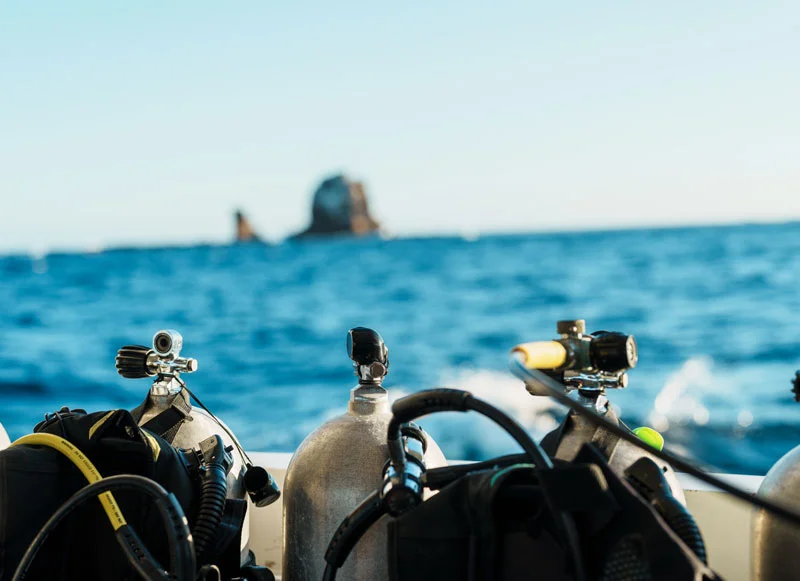
There are no hotels, no dive shops and no day boats at Darwin and Wolf. The islands are simply too far from the inhabited central islands to reach and return in a single day. The only way to dive them is to sleep aboard a boat that sails north and anchors within reach of the sites — in other words, a liveaboard.
The journey north
From the central islands, a liveaboard crosses to Wolf and Darwin overnight, covering the distance while you rest. You wake up already at the dive sites, ready to get in the water — no long daily commutes, no wasted hours.
More diving, no time lost on land
Because you’re living aboard, your days revolve entirely around diving. A typical itinerary packs in several dives a day at the richest sites, something that’s simply impossible from a land base. For divers who travel this far, that difference is everything: more time in the water, at the best sites, when conditions are right.
What you'll see at Darwin and Wolf
Few places on Earth deliver big animals as reliably as Darwin and Wolf. Here’s what makes the marine life so special.
Schooling hammerhead sharks
This is the signature encounter. Darwin and Wolf are world-famous for enormous schools of scalloped hammerhead sharks that gather in the hundreds, drifting overhead in slow-moving walls. It’s one of the most breathtaking sights in all of diving, and it’s the main reason divers cross an ocean to get here.
Whale sharks
Between roughly June and November, the world’s largest fish passes through. Darwin in particular is famous for whale shark sightings — often huge, mature females, many believed to be pregnant. Sharing the water with an animal the length of a bus is the kind of moment divers remember for the rest of their lives.
The big stuff doesn't stop there
Alongside the headliners, expect Galapagos sharks, silky sharks, eagle rays, green sea turtles, dolphins, and dense schools of jacks, tuna and creolefish. On the right day, the water is alive in every direction.
Diving Darwin's Pillars and Wolf's signature sites
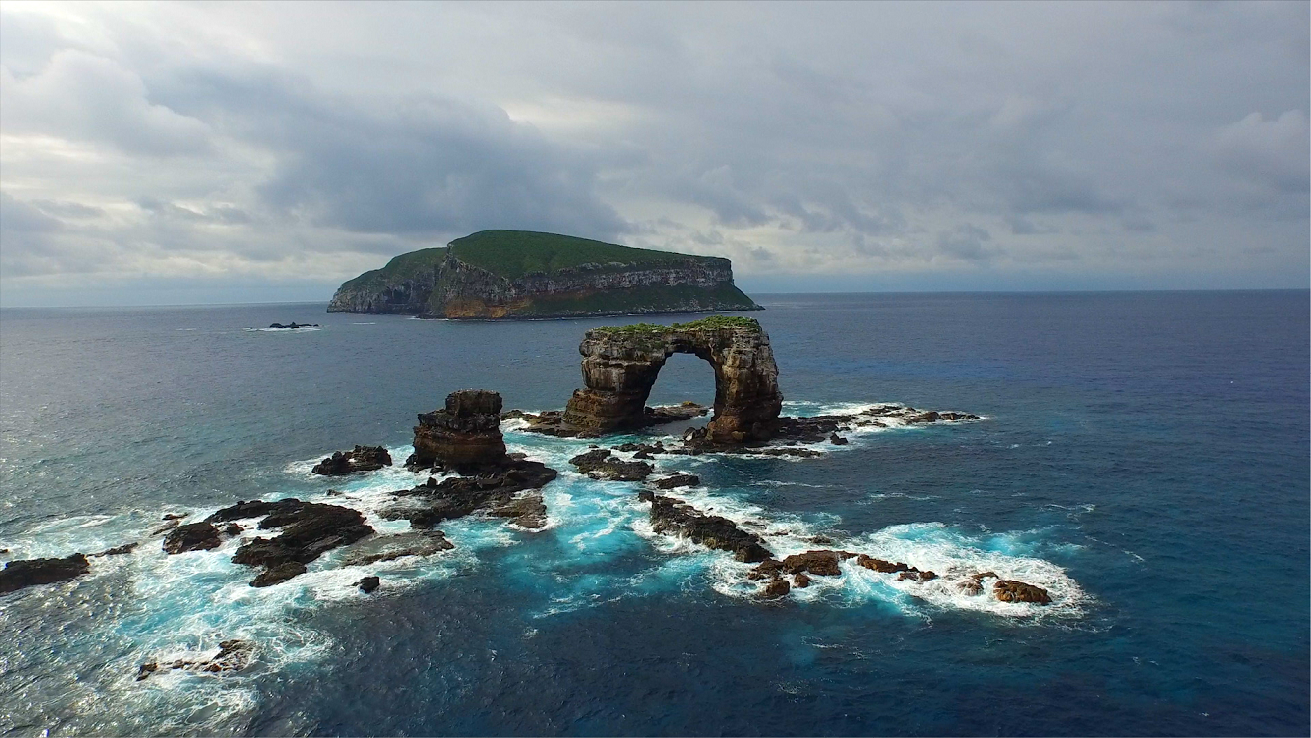
Darwin’s most famous landmark, the rock arch known as Darwin’s Arch, collapsed in 2021 — but the dive site itself, now often called Darwin’s Pillars, remains as spectacular as ever. The change was only to the rock formation above the surface; underwater, this area continues to be ranked among the best dive sites in the Galapagos. At Wolf, sites like Shark Bay and the Landslide deliver the same electric mix of sharks and schooling fish. These are advanced dives shaped by strong currents — which is exactly what draws the big animals in.
The best time to dive Darwin and Wolf
Choosing the best time to dive Darwin and Wolf comes down to what you most want to see. The islands can be dived year-round, and hammerhead sharks are present in every season. The cooler season, roughly June to November, brings nutrient-rich water and the best chance of whale sharks, along with bigger aggregations of marine life — though the water is cooler and conditions can be more demanding. The warmer season, roughly December to May, offers warmer water, calmer surface conditions and excellent visibility. There’s no bad time to make this trip; there’s only the time that fits what you came to see.
The experience you'll need
Darwin and Wolf are not beginner dives. The currents are strong, the sites are exposed, and the conditions reward comfort and good buoyancy control in moving water. Most liveaboards to these islands ask for an advanced certification and a solid number of logged dives, and experience diving in currents is strongly recommended. If you’re still working toward this trip, it’s worth building up your dive log and your confidence first — the payoff is more than worth the preparation.
Your 7-night Darwin & Wolf liveaboard
Galapagos liveaboard 2026 2027 Darwin & Wolf
Ready to dive? Both of our liveaboards — the Tiburon Explorer and the Humboldt Explorer — run seven-night itineraries built around the northern islands. Compare dates, itineraries and rates, and secure your place on the world’s greatest shark diving.
Frequently asked questions about Darwin & Wolf liveaboard diving
Why can you only dive Darwin and Wolf on a liveaboard?
Because Darwin and Wolf lie far north of the inhabited Galapagos islands, too far to reach and return in a single day. There are no hotels, dive shops or day boats there. The only way to dive them is aboard a liveaboard that sails north overnight and anchors within reach of the sites.
When is the best time to dive Darwin and Wolf?
Darwin and Wolf can be dived year-round, and hammerhead sharks are present in every season. The cooler season (roughly June to November) brings nutrient-rich water and the best chance of whale sharks, while the warmer season (roughly December to May) offers warmer water, calmer conditions and excellent visibility. The best time depends on what you most want to see.
When can you see whale sharks at Darwin and Wolf?
Whale sharks are most commonly seen between roughly June and November, with Darwin being the prime spot. Many of the whale sharks here are large, mature females. Sightings are never guaranteed, but this window offers the strongest chance of encountering the world’s largest fish.
Do you need to be an advanced diver to dive Darwin and Wolf?
Yes. Darwin and Wolf are advanced dives with strong currents and exposed conditions. Most liveaboards require an advanced certification and a solid number of logged dives, and experience diving in currents is strongly recommended. These are not suitable dives for beginners.
How many hammerhead sharks can you see at Darwin and Wolf?
On a good dive, hammerheads gather in schools that can number in the hundreds, drifting overhead in slow-moving walls. The exact numbers vary by season and conditions, but Darwin and Wolf consistently offer some of the largest hammerhead aggregations anywhere in the world.
How long is a Darwin and Wolf liveaboard trip?
Reaching these remote islands properly takes a full week. Most Darwin and Wolf liveaboard trips run seven nights, which allows for several dives a day at the best sites and time to make the most of the conditions. Shorter trips can’t do the northern islands justice.
Can you still dive Darwin's Arch?
The famous rock arch known as Darwin’s Arch collapsed in 2021, but the dive site itself — now often called Darwin’s Pillars — is as spectacular as ever. The collapse only affected the rock formation above the surface; the underwater experience remains one of the best on the planet.