The Galapagos Marine Reserve protects approximately 138,000 sq km (53,282 sq mi) of the Pacific Ocean around the islands, including the inland waters inside a «baseline» connecting the outer points of the archipelago, a 40-nautical-mile buffer zone, and an additional 20-mile zone of minimum impact. In 2022, Ecuador expanded ocean protection even further with the creation of the neighboring Hermandad Marine Reserve, bringing the total protected area to roughly 198,000 sq km. Dive inside that protected zone — our guide to the best Galapagos dive sites shows where the marine reserve’s biodiversity is most spectacular.
A Protected Reserve Since 1998
The Galapagos Marine Reserve was formally established in 1998 under Ecuador’s Special Law for Galapagos, expanding an initial reserve created in 1986 and closing a long chapter of unregulated fishing in these waters — including shark finning and large-scale sea cucumber harvesting that had put several species at risk. The reserve sits alongside the Galapagos Islands’ UNESCO World Heritage status, and today it is recognized as one of the most biodiverse marine protected areas on the planet.
Where Three Ocean Currents Meet
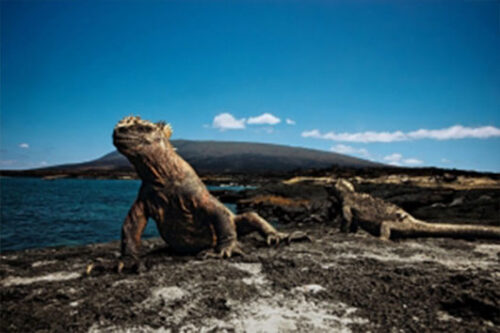
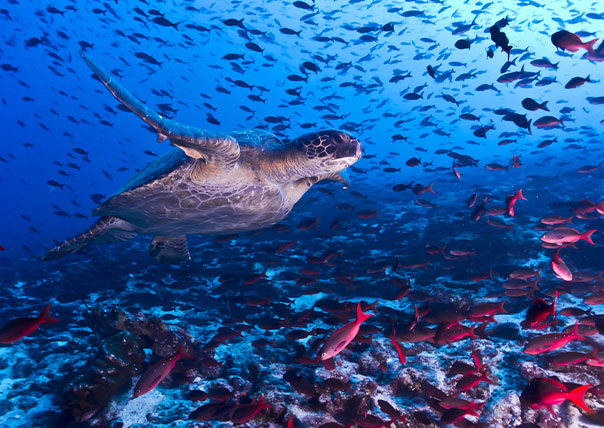
The reserve’s richness comes largely from geography: the warm Panama Current meets the colder Humboldt and Cromwell currents here, creating a mix of warm- and cold-water habitats found almost nowhere else. The result is close to 3,000 recorded marine species, including hammerhead sharks, whale sharks, manta rays, sea lions, Galapagos penguins, waved albatross and marine iguanas — all protected within reserve waters.
Diving Responsibly Inside the Reserve
Every dive inside the Galapagos Marine Reserve follows the Galapagos National Park’s rules for visitors: no touching or removing marine life, no feeding animals, no littering (all waste stays on board), and every dive site is visited with a certified, park-approved guide. On board the Tiburon Explorer and Humboldt Explorer, these rules are part of every briefing — so you can enjoy the reserve’s marine life while helping keep it protected for future visitors.