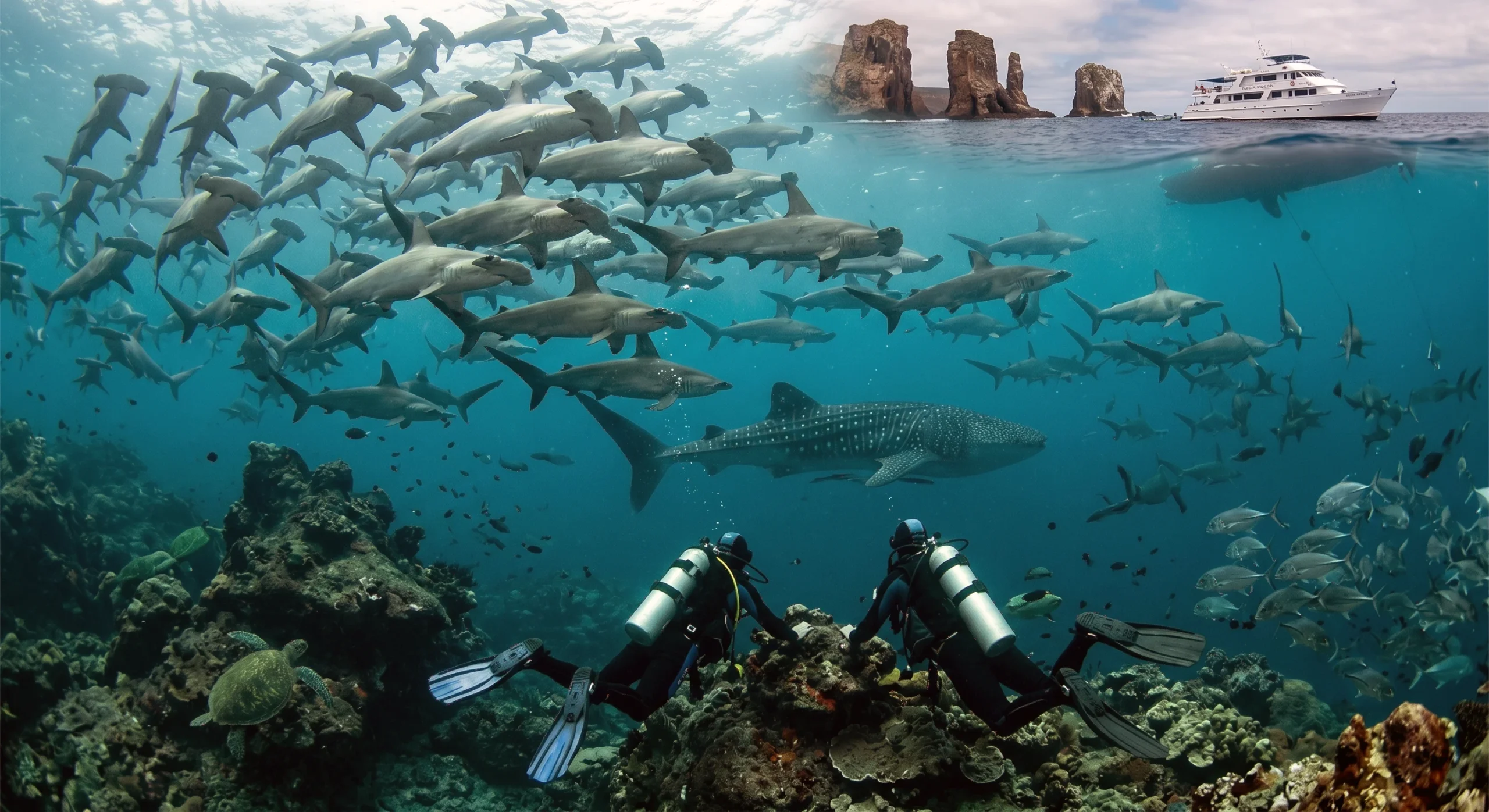
The Galapagos is the best place on Earth to dive with hammerhead sharks — and not in ones and twos, but in schools that can number in the hundreds. These slow-moving walls of scalloped hammerheads gather at the remote northern islands of Darwin and Wolf, and witnessing them is one of the most jaw-dropping experiences in all of diving.
If hammerheads are the reason you want to dive the Galapagos, this is everything you need to know: where to find them, when the diving is best, what the encounter is actually like, and what it takes to get there.
Why the Galapagos is the world's best place to dive with hammerheads
The Galapagos sits at the meeting point of major ocean currents, and the cold, nutrient-rich water they carry feeds an enormous food chain. That abundance draws scalloped hammerhead sharks in numbers seen almost nowhere else. Hammerheads live in oceans all over the world, but the Galapagos is famous for the sheer size of its schools — hundreds of animals drifting together in formation. The marine reserve also protects them, making these islands one of the last great strongholds for a species that is endangered across much of its range.
Where to dive with schooling hammerheads
Darwin and Wolf — the hammerhead capital
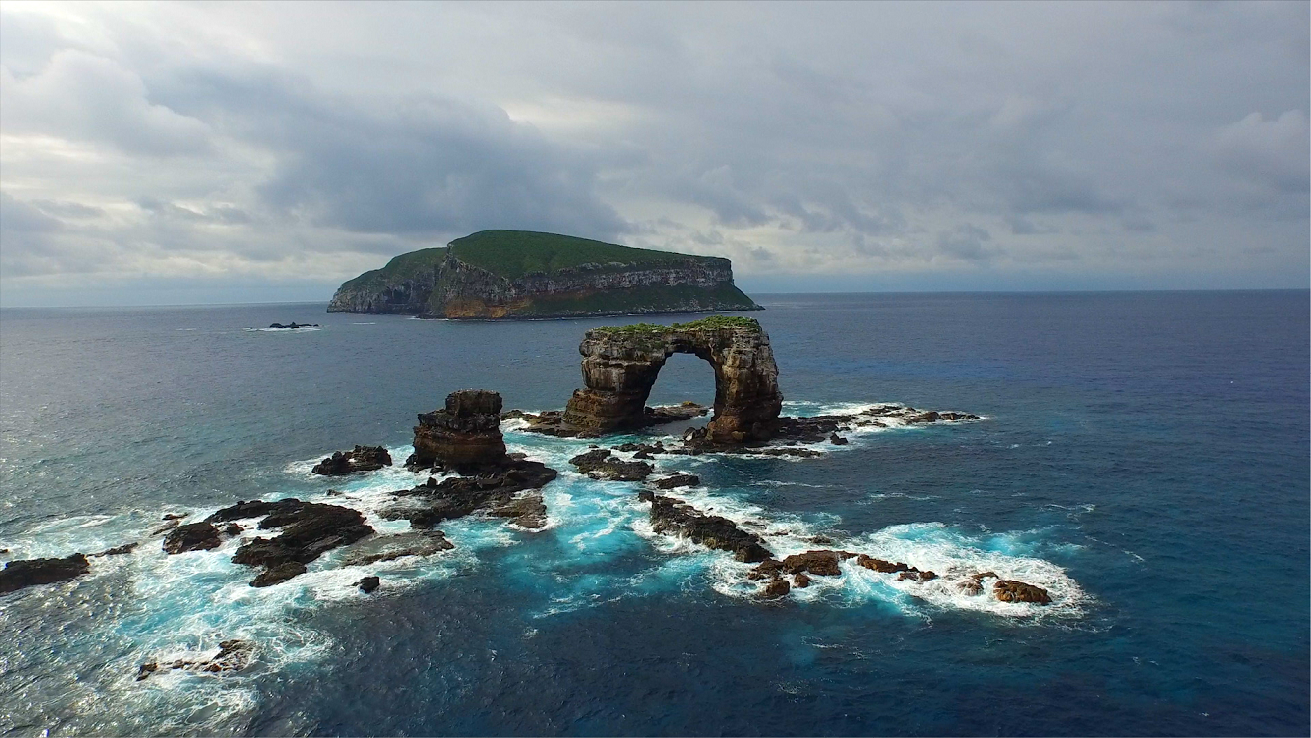
The legendary hammerhead schools gather at Darwin and Wolf, the two remote islands in the far north of the archipelago. This is where you will see them in the greatest numbers, swirling overhead in slow-moving walls above the best Galapagos dive sites. Because these islands lie far beyond the reach of any day boat, the only way to dive them is aboard a liveaboard — which is exactly what keeps the experience so special and so uncrowded. You can read the full picture on our guide to Darwin and Wolf liveaboard diving.
The best time to see hammerhead sharks in the Galapagos
Hammerheads are present at Darwin and Wolf all year round, so there is no wrong time to come for them. Choosing the best time to dive the Galapagos for hammerheads comes down to what else you hope to see. The cooler, dry season — roughly June to November — brings the richest water and the best chance of whale sharks alongside the hammerheads, though the water is cooler and the currents can be stronger. The warmer season — roughly December to May — offers warmer, calmer water and excellent visibility. Either way, the hammerheads are there.
What it's like to dive with hundreds of hammerheads
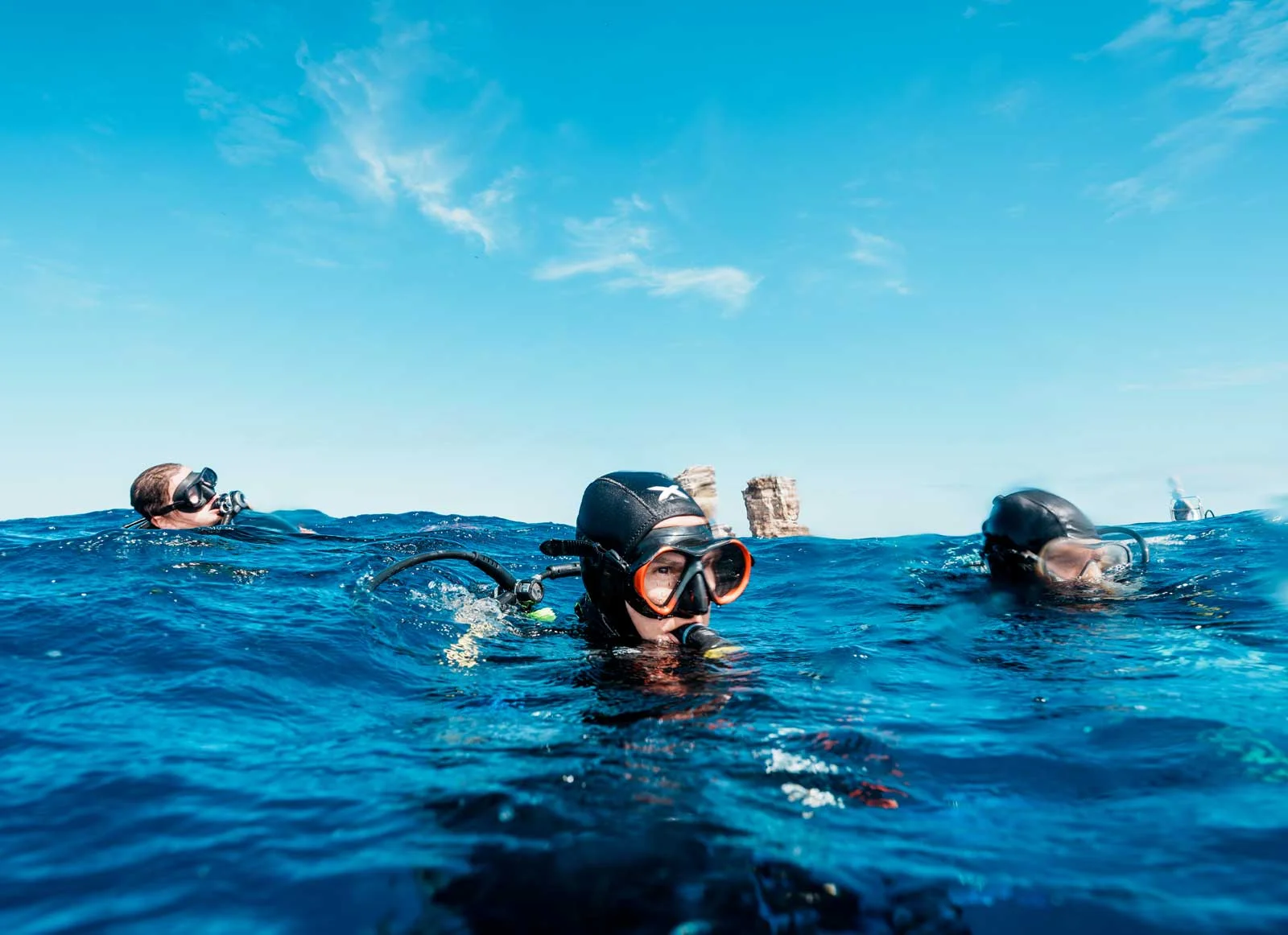
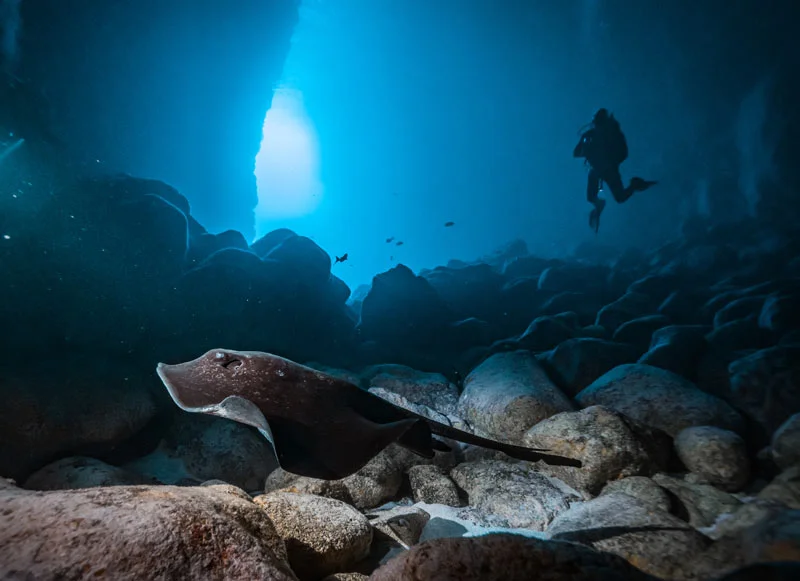
Picture hanging quietly in the current along a rocky slope as, above you, a river of sharks slides past — dozens, then hundreds of scalloped hammerheads moving as one. They are surprisingly shy, and the trick is to stay calm and low, breathe slowly, and let them come to you. When the school accepts your presence and drifts directly overhead, blocking out the light, it is a feeling that is almost impossible to put into words. For many divers, it is the single greatest moment of their diving lives.
The other sharks and big animals you'll meet
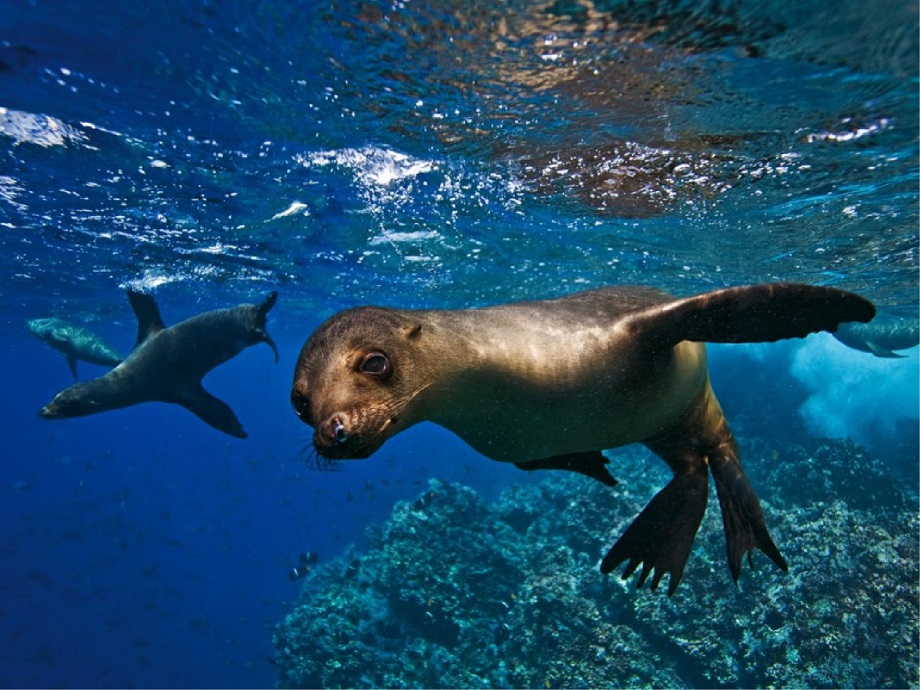
Hammerheads may be the headline, but they share the water with an extraordinary cast. Expect Galapagos sharks and silky sharks, and — in the cooler months — whale sharks, the largest fish in the ocean. Add eagle rays, sea turtles, dolphins and dense schools of fish, and almost every dive at Darwin and Wolf turns into a big-animal spectacle.
What you need, and how to get there
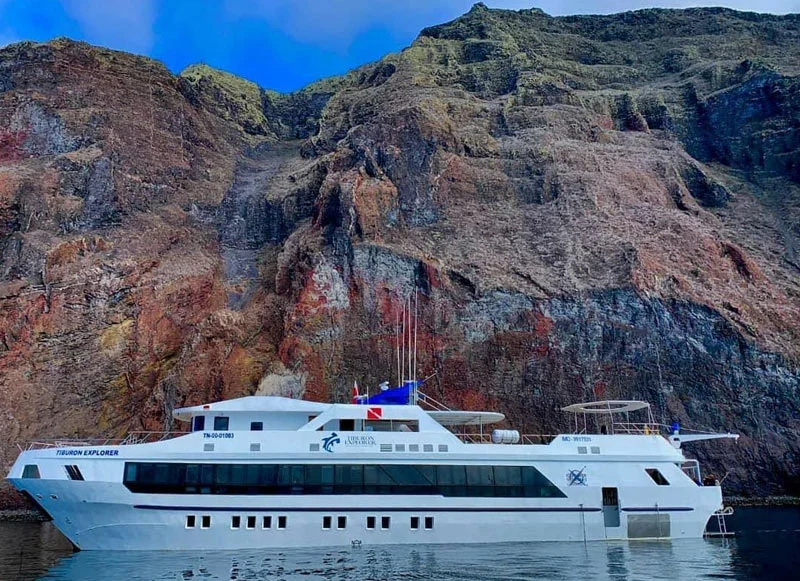
Diving with the Galapagos’ hammerhead schools means diving Darwin and Wolf, and these are advanced sites: strong currents, deep blue water and exposed conditions. Most liveaboards ask for an advanced certification and a solid number of logged dives. Both of our liveaboards — the Tiburon Explorer, our luxury-class vessel, and the Humboldt Explorer — run seven-night itineraries built around these islands, so you spend your whole week exactly where the sharks are. If you are weighing up a trip, it helps to know how much a Galapagos liveaboard costs and exactly what the price covers.
Ready to dive with hundreds of hammerheads?
See how our seven-night liveaboard trips put you in the water at Darwin and Wolf, the hammerhead capital of the world.
Frequently asked questions about hammerhead shark diving in the Galapagos
Where is the best place to see hammerhead sharks in the Galapagos?
The remote northern islands of Darwin and Wolf. They are home to the largest schools of scalloped hammerheads in the archipelago, often numbering in the hundreds. Because they lie far from the central islands, they can only be reached by liveaboard.
When is the best time to see hammerheads in the Galapagos?
Hammerheads are present at Darwin and Wolf year-round, so any time of year is good. The cooler season (roughly June to November) brings the richest water and the added chance of whale sharks, while the warmer season (roughly December to May) offers warmer, calmer water and great visibility.
How many hammerhead sharks can you see at once?
On a good dive at Darwin or Wolf, schools can number in the hundreds, drifting overhead in slow-moving walls. Numbers vary with season and conditions, but the Galapagos consistently offers some of the largest hammerhead aggregations on the planet.
Are hammerhead sharks dangerous to divers?
No. Scalloped hammerheads are shy and tend to keep their distance from divers. The challenge is usually getting them to come closer, not staying safe. Calm, quiet diving and good buoyancy give you the best chance of a close encounter.
What kind of hammerheads live in the Galapagos?
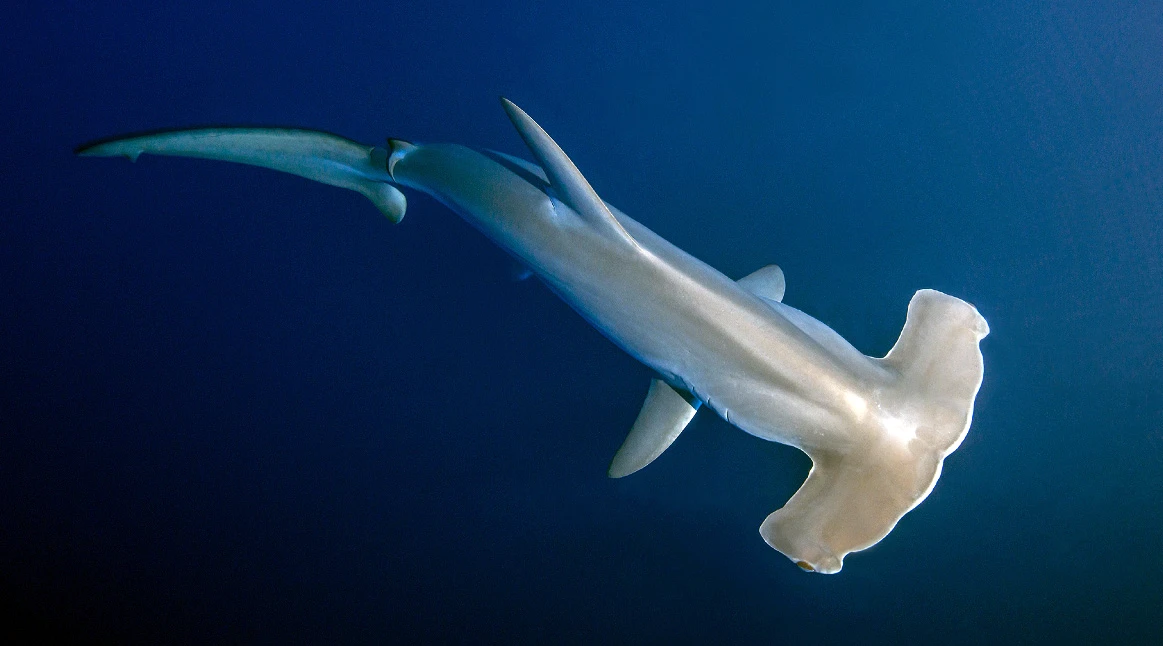
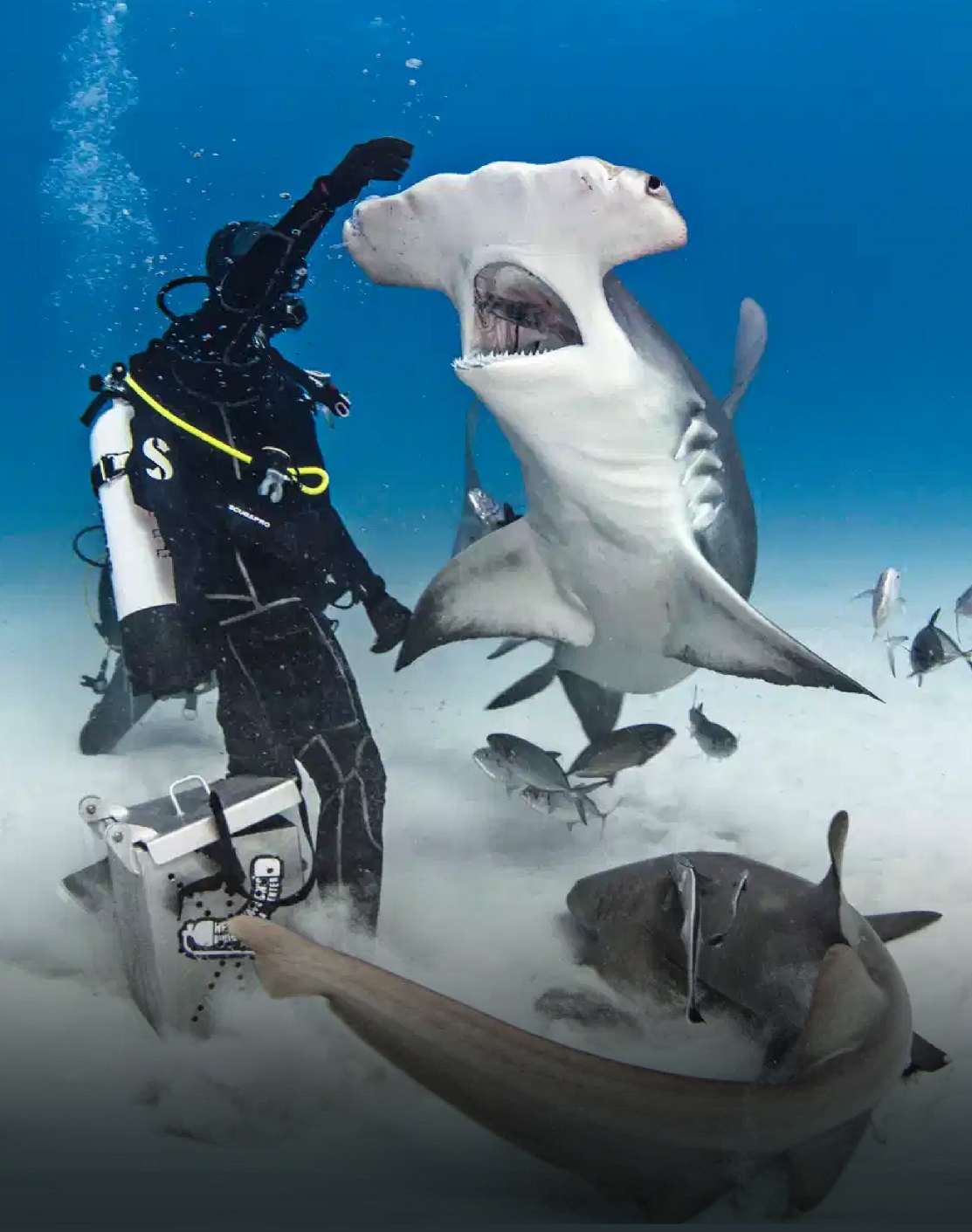
The schooling hammerheads of the Galapagos are scalloped hammerheads, named for the notched, hammer-shaped head that spreads their eyes and electro-sensors wide apart for close to 360-degree vision and a sharper sense for prey hidden in the sand. They gather in large numbers during the day around current-swept points and cleaning stations, and disperse to hunt at night. The species is endangered globally, which makes the protected Galapagos population especially significant.
Can you see hammerheads on a day trip?
Occasional hammerhead sightings are possible at some central dive sites, but the famous schooling aggregations are found only at Darwin and Wolf. Those islands are too far to reach in a day, so seeing the big schools means joining a liveaboard.
Do you need to be an experienced diver to see the hammerhead schools?
Yes. The hammerhead schools are at Darwin and Wolf, which are advanced dives with strong currents. Most liveaboards require an advanced certification and a solid number of logged dives, plus comfort diving in current. They are not suitable for beginners.
Can you dive with hammerheads on a luxury liveaboard in the Galapagos?
Yes. The Tiburon Explorer, our luxury-class liveaboard, runs the same seven-night itinerary to Darwin and Wolf as our other vessel, so you get the hammerhead schools with a higher level of onboard comfort and service.