Galapagos Conditions for Marine Animals

| Updated on July 25, 2026
Galapagos Conditions for Marine Animals

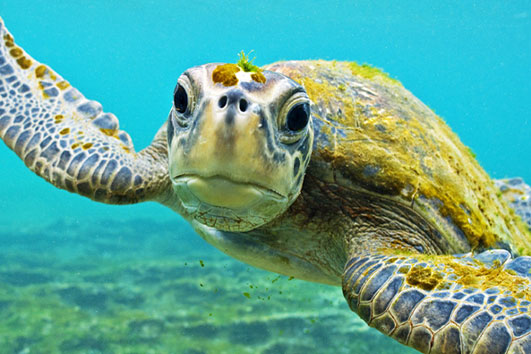
Marine life in the Galapagos is very rich, though not so varied as in warmer tropical waters. Due to the cold water there are only a few species of corals and those grow mostly in the subtidal zone. There are nice reefs near Floreana (Devil’s Crown, Onslow island), Bartolomé Island, Champion island and Wolf and Darwin.

In the warm season (from December to May), the chance to see whale sharks is very high (in the northern islands), and you can also observe them in the central islands. In the cold season (May to December) the chance to see whale sharks is about 50 percent, and you see more rays like mantas, mobula, and eagle rays, since they get together in schools to mate. Hammerheads can be found throughout the Galapagos Archipelago year-round. The large schools of fish, sea turtles, sea lions, iguanas and penguins are also found during the whole year.

Related Articles
The Galapagos Marine Reserve: 138,000 sq km of protected Pacific Ocean, including a 40-nautical-mile buffer zone around the archipelago.
What does a Galapagos liveaboard really cost? See what's included, what's extra, and a full sample budget for your 7-night trip.
Galapagos travel basics: what to expect, how tours work, last-minute changes and why a liveaboard gives you the most out of your time on the