A 7-night Galapagos liveaboard costs about €8,050 to €8,950 per person from Europe, all in. The boat price is €5,700 on Humboldt Explorer or €6,600 on Tiburon Explorer. Flights, mandatory cash fees, crew tips and two hotel nights add roughly €2,350 on top. Figures use $1.12 per euro, and our rates are set in US dollars.
You have seen the price on the boat’s page. Now you want the number that will actually leave your bank account. Here is the full picture for divers flying in from Europe, line by line, so there are no surprises at the airport.
How much does a Galapagos liveaboard cost from Europe in total?
Add everything up and a diver flying in from Madrid, Amsterdam or any other European city pays about €8,050 on Humboldt Explorer or €8,950 on Tiburon Explorer. That assumes you share a cabin, bring your own dive gear and spend two nights in Guayaquil, the city where your journey to the islands starts.
| Cost (per person) | Humboldt Explorer | Tiburon Explorer |
|---|---|---|
| Liveaboard, 7 nights (July 2026 to June 2027 rates) | $6,395 · about €5,700 | $7,395 · about €6,600 |
| Mandatory fees paid in cash | $405 · about €360 | $405 · about €360 |
| Round-trip flight Guayaquil–Galapagos | about $600 · about €535 | about $600 · about €535 |
| Crew gratuities | about $500 · about €445 | about $500 · about €445 |
| Two hotel nights in Guayaquil | about $240 · about €215 | about $240 · about €215 |
| Round-trip flight from Europe to Guayaquil | about €800 | about €800 |
| Total per person | about €8,050 | about €8,950 |
The extras come to about €2,350 per person, which is more than a third on top of the boat price. Departures from July 2027 to June 2029 are $6,495 (about €5,800) on Humboldt Explorer and $7,495 (about €6,650) on Tiburon Explorer, and from July 2029 to December 2030 they are $6,695 (about €5,950) and $7,695 (about €6,850). Amounts are rounded. Euro figures use $1.12 per euro, the late-October 2026 market rate, and flight fares are typical prices seen on comparison sites, which change daily. For the dollar breakdown, see our full Galapagos liveaboard cost guide.
What does the boat price cover?
Your boat price covers almost everything you do day to day on board:
- 7 nights and 8 days aboard the vessel (10 nights and 11 days on longer trips)
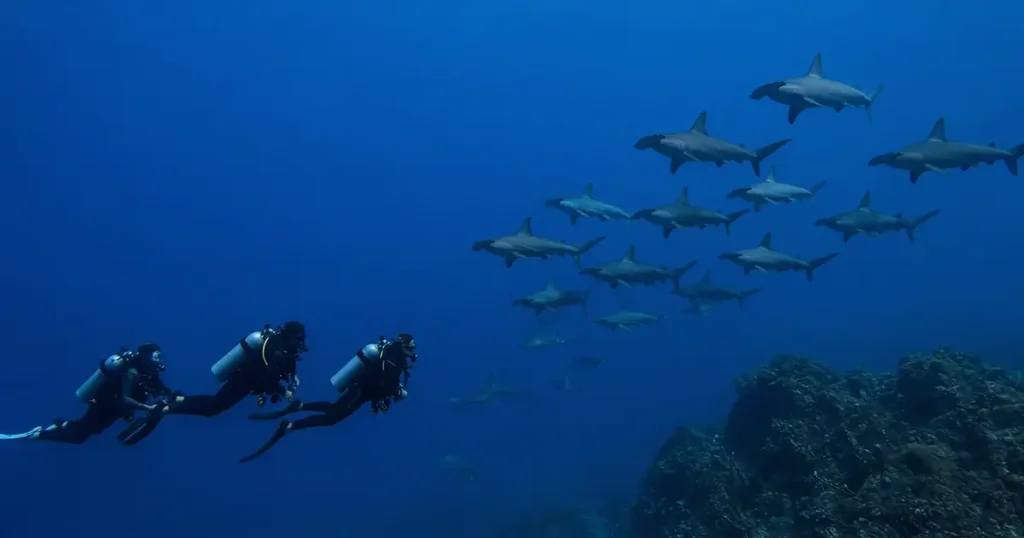
- Up to 4 dives a day, weather permitting
- Three meals a day plus snacks between dives (the last evening’s dinner is on your own in Puerto Ayora)
- Towels and linens
- Tanks, weights, weight belts and all air fills
- Local alcoholic and non-alcoholic drinks on board
- Airport transfers between Baltra and the boat on your arrival and departure day, with the airport shuttle fare already paid
Everything else on this page is paid separately, and that is where most European travelers get caught out.
Which extras are not in the boat price?
Every diver pays $405 in mandatory fees, in US dollars and in cash. They are the same on both boats. Your boat price never includes them.
| Mandatory fee (per person) | US dollars | About in euros |
|---|---|---|
| Galapagos National Park entrance fee | $200 | €180 |
| Galapagos transit card | $20 | €20 |
| Fuel tax | $150 | €135 |
| Hyperbaric chamber fee | $35 | €30 |
| Total | $405 | €360 |
Then there are three costs that depend on your plans. Crew gratuities are about $500 per person, and the usual way to tip is a single envelope that the captain shares with the whole crew; here is how crew tips work. A hotel night in Guayaquil is around $120. We budget two nights: one before sailing, so a late flight never costs you the boat (you must land in Baltra by 11:30 am on day one), and one after. The round-trip flight from Guayaquil to the Galapagos is about $600.
How much are flights from Europe to Guayaquil?
Direct flights to Guayaquil leave from Madrid and Amsterdam and take about 12 hours. Travelers from Warsaw, Prague, Bucharest or Budapest usually connect in one of those two cities.
Round-trip fares from Madrid to Guayaquil start around €540 in the cheapest months, March to May, and can pass €1,000 in August. We use €800 as a safe middle figure. Compare fares against the diving season before you pick your dates; our guide to the best time to dive Galapagos shows what each month offers.
Round-trip fares from Madrid to Guayaquil start around €540 in the cheapest months, March to May, and can pass €1,000 in August. We use €800 as a safe middle figure. Compare fares against the diving season before you pick your dates; our guide to the best time to dive Galapagos shows what each month offers.
From Guayaquil you fly on to Baltra, the island airport where our dive guides meet you. For the full route, see how to get to Galapagos from Europe.

Tiburon Explorer or Humboldt Explorer: what does the extra money buy?
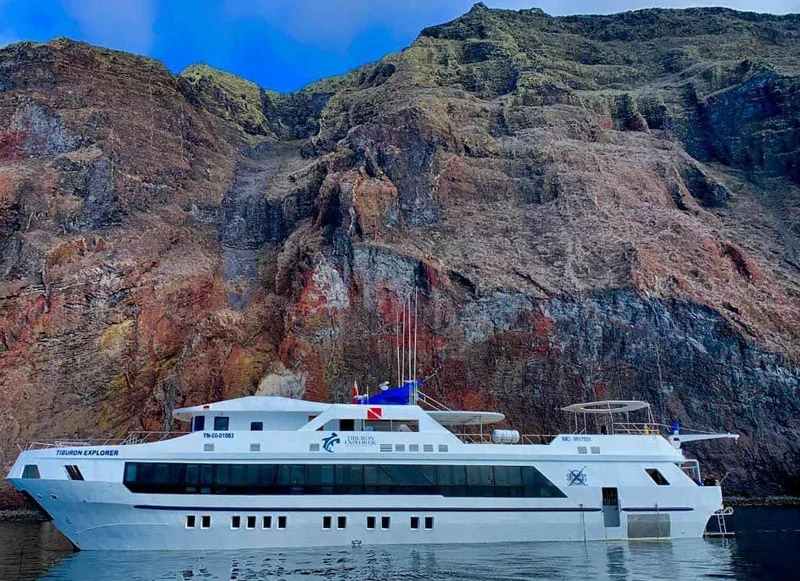
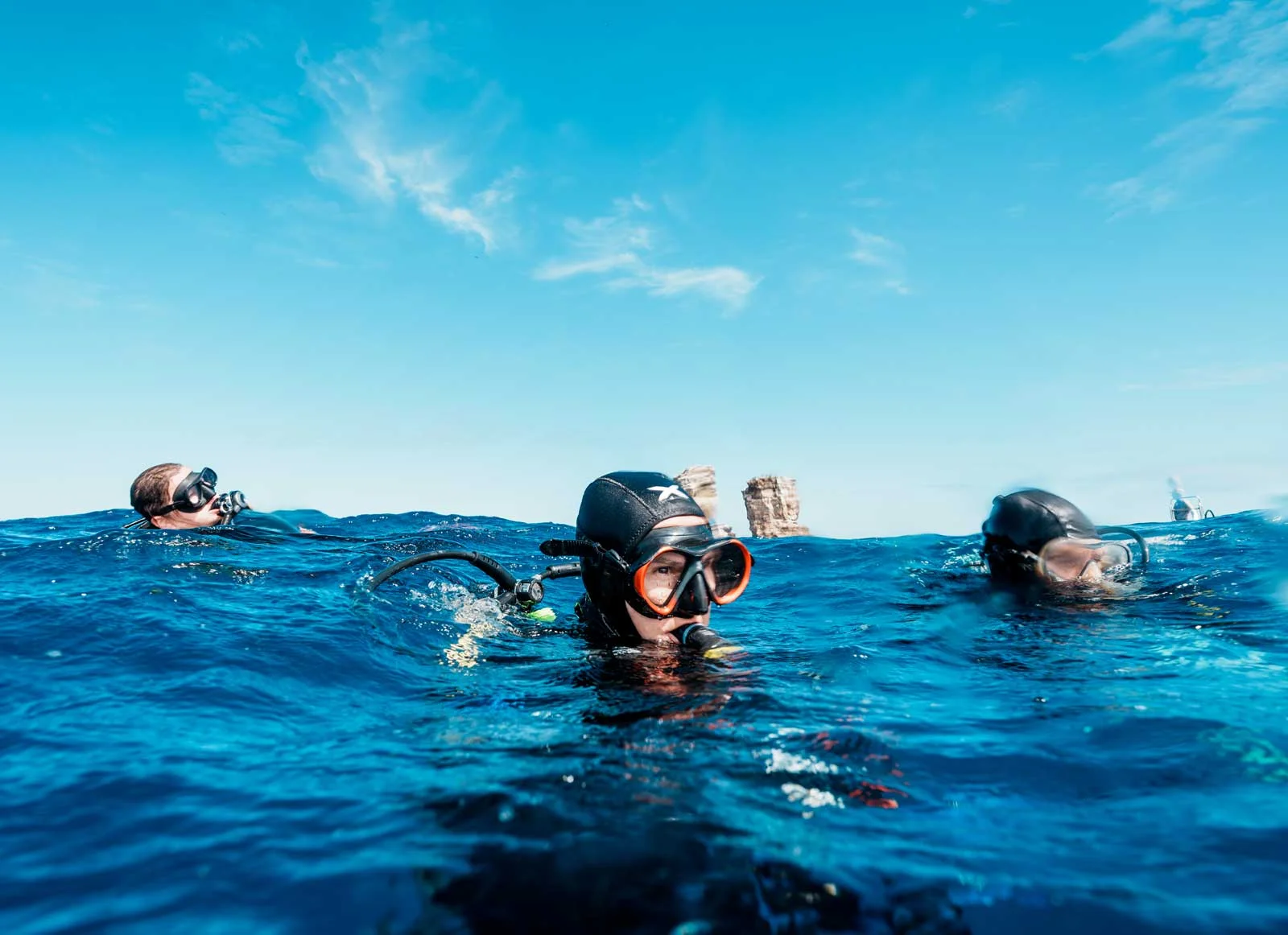
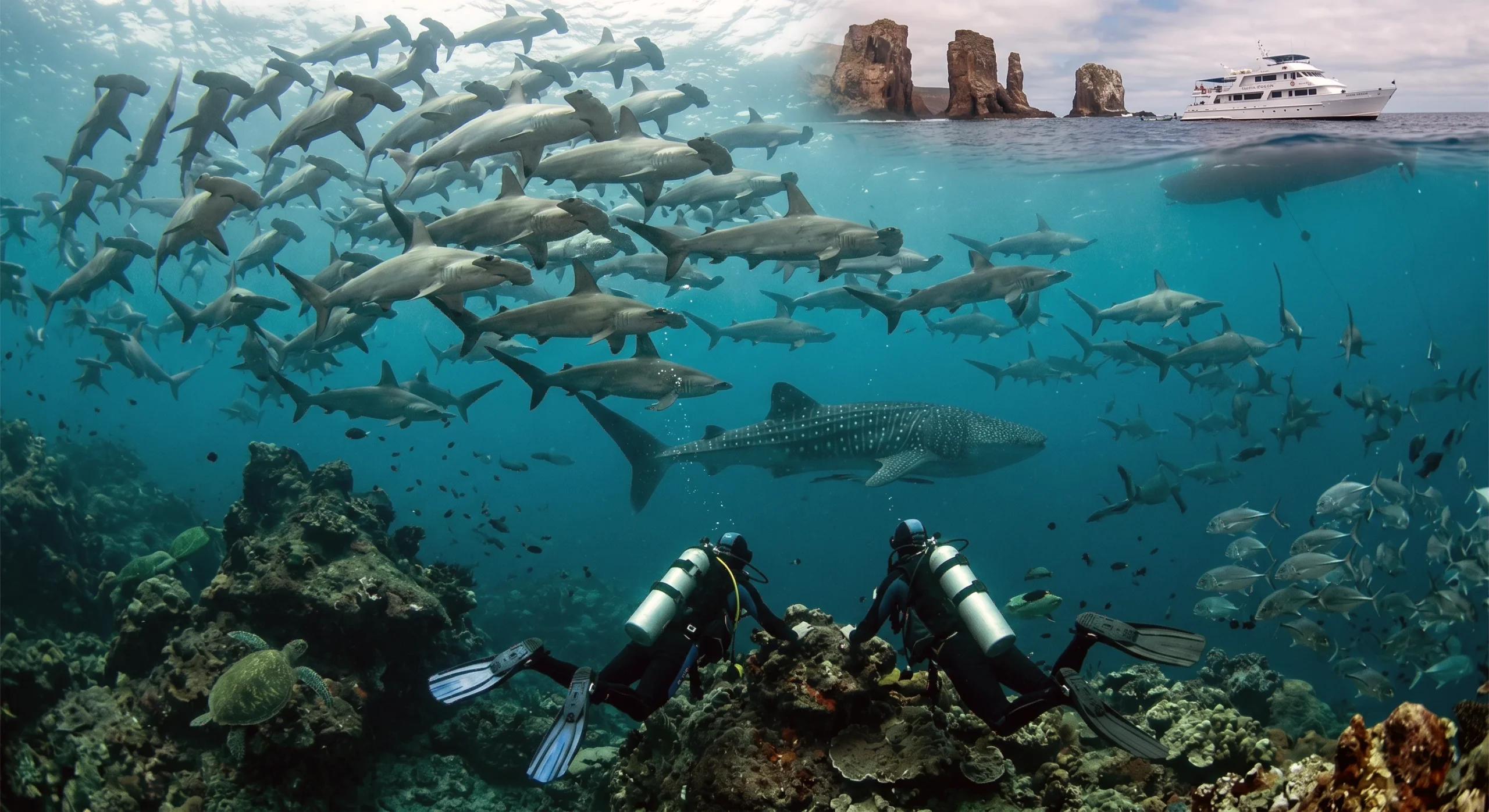
The difference between the two boats is $1,000 per person, about €890. Tiburon Explorer is our luxury vessel and Humboldt Explorer is our first-class vessel. Both sail from Baltra and back in 7 nights to Wolf, Darwin and Cousin’s Rock, with up to four dives a day. Tiburon Explorer also stops at Cabo Douglas and Punta Vicente Roca on the way north. Check open dates on the Tiburon Explorer departures and Humboldt Explorer departures pages.
What does a 10-night Galapagos liveaboard cost?
Longer trips of 10 nights and 11 days are also available. Here is the boat price per person, sharing a cabin:
| Boat | Departures | 10 nights, per person |
|---|---|---|
| Humboldt Explorer | July 2026 to June 2027 | $8,995 · about €8,000 |
| Humboldt Explorer | July 2027 to June 2029 | $9,295 · about €8,300 |
| Humboldt Explorer | July 2029 to December 2030 | $9,795 · about €8,700 |
| Tiburon Explorer | July 2026 to December 2027 | $9,995 · about €8,900 |
| Tiburon Explorer | January 2028 to June 2029 | $10,295 · about €9,150 |
| Tiburon Explorer | July 2029 to June 2030 | $10,595 · about €9,450 |
| Tiburon Explorer | July to December 2030 | $10,795 · about €9,600 |
Flights from Europe, the island flight and your two hotel nights cost the same as on a 7-night trip. Crew tips and some fees can differ on a longer trip, so ask us for the exact total for your dates.
Paying from Europe: euros, dollars and card fees
Our rates are set in US dollars, so the price in euros moves with the exchange rate. A weaker euro makes the trip cost more in euros; a stronger euro makes it cost less. Booking takes a 30% deposit and the balance is due 90 days before departure. At today’s rate, the deposit is about €1,710 on Humboldt Explorer and €1,980 on Tiburon Explorer.
You can pay by bank transfer or credit card. Cards carry an 8% surcharge, which is about €455 on Humboldt Explorer and €525 on Tiburon Explorer. A bank transfer avoids it, though your own bank may charge an international transfer fee, so ask before you send. Tell us your country and we will point you to the easiest option.
Which optional extras can change your total?
These costs depend on how you dive and how you travel:
| Optional extra | Cost | About in euros |
|---|---|---|
| Full scuba rental package (BCD, regulator, console, wetsuit), per week | $250 | €225 |
| Dive computer, per week | $100 | €90 |
| Nitrox, per person | $150 | €135 |
| Single supplement, if you do not share a cabin | 80% | Ask for your dates |
| Dive accident insurance (DAN or DiveAssure), required | Varies | Varies |
| Trip cancellation insurance | Varies | Varies |
Dive accident insurance is required before boarding. Our Galapagos information guide has the full requirement.
How can you keep the total down?
You cannot change the boat’s rate, but you can control the rest:
- Bring your own dive gear. A full rental package plus a dive computer is $350 (about €310) per week.
- Pick your flight month with care. Fares to Guayaquil are lowest from March to May and highest in August.
- Pay the boat by bank transfer to skip the 8% card surcharge.
- Share a cabin to avoid the 80% single supplement.
Dive accident insurance is required before boarding. Our Galapagos information guide has the full requirement.
Want your exact total in euros?
Tell us your dates, your boat and how many of you are traveling, and we will send a clear quote for your trip. Chat with us on WhatsApp.
Frequently asked questions about Galapagos liveaboard cost from Europe
How much does a Galapagos liveaboard cost from Europe in euros?
A 7-night Galapagos liveaboard costs about €8,050 to €8,950 per person from Europe, including flights, cash fees, crew tips and two hotel nights. The boat alone is about €5,700 on Humboldt Explorer or €6,600 on Tiburon Explorer, at $1.12 per euro.
What is not included in the boat price?
Flights, hotel nights, crew gratuities, dive accident insurance, trip cancellation insurance, equipment rental, nitrox, premium drinks, the last evening’s dinner and $405 in mandatory fees are not included.
How much cash do I need to bring?
Plan for $405 per person in US dollars, about €360, for the park entrance fee ($200), transit card ($20), fuel tax ($150) and hyperbaric chamber fee ($35). The usual way to tip the crew is an envelope handed to the captain, who shares it with everyone on board.
Are flights from Europe included?
No. Flights from Europe to Guayaquil and from Guayaquil to the Galapagos are paid separately. Direct flights to Guayaquil leave from Madrid and Amsterdam and take about 12 hours. Budget about €800 for the long-haul flight and about $600 for the island flight.
Does the price change with the euro exchange rate?
Yes. Our rates are set in US dollars, so the price in euros moves with the exchange rate. This guide uses $1.12 per euro, the late-October 2026 rate. A weaker euro makes the trip cost more in euros, and a stronger euro makes it cost less.
How do I pay, and is there a deposit?
Booking takes a 30% deposit, and the balance is due 90 days before departure. You can pay by bank transfer or credit card, and card payments carry an 8% surcharge.
Is there a 10-night option, and what does it cost?
Yes. A 10-night trip, which lasts 11 days, costs $8,995 to $10,795 per person for the boat alone, depending on the vessel and the dates. That is about €8,000 to €9,600 at $1.12 per euro. Flights and hotel nights stay the same, so ask us for the exact total for your dates.