The Galápagos Islands are surrounded by Deep Ocean

| Updated on July 26, 2026
The Galápagos Islands are surrounded by Deep Ocean

The Galápagos Islands are completely surrounded by Deep Ocean.

Less than 20km (13 mi) off the coasts of the western islands, the ocean is over 300m (1000 ft) deep.
Indeed, some of the oldest volcanoes are completely submerged, like the Carnegie Ridge, a submerged mountain range stretching east from the Galápagos half way to the mainland.
It includes the remnants of some previous volcanic islands that are possibly nine million years old.
When an eruption occurs, the molten basalt disgorges in a lava flow rather than in an explosive blast that discharges cinder and ash to form a cone-shaped volcano.

That deep water is what draws pelagic giants close to shore — explore the best Galapagos dive sites where the drop-offs deliver the biggest encounters.
Related Articles
Dive with huge schools of hammerhead sharks in the Galapagos: where to see them, the best season, and why Darwin and Wolf hold the biggest
Entry into Ecuador and the Galapagos: passport rules, transit card, national park fee and the travel insurance now required for all visitors.
What does a Galapagos liveaboard really cost? See what's included, what's extra, and a full sample budget for your 7-night trip.
Tiburon Explorer’s itinerary

8 days/ 7 nights

Saturday: Baltra
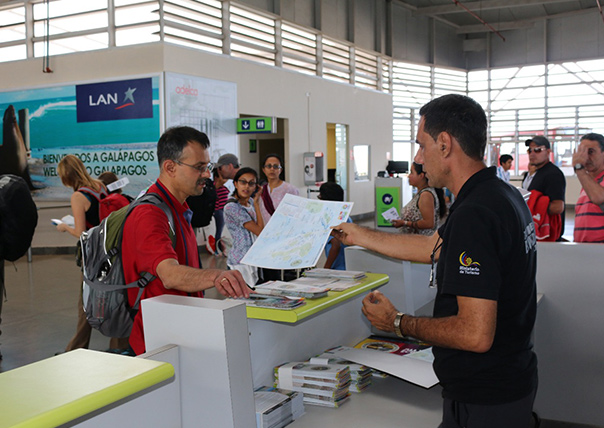
Guests fly to the Galapagos Islands from Mainland Ecuador, arriving in the late morning (please make sure to land in Baltra not later than 11:30am). The dive guides will meet the guests at the airport between 11:00 am and 12 pm and escort them to the Galapagos liveaboard, Tiburon Explorer®. Guests will board the vessel, have lunch, organize equipment and listen to the safety briefings.

Sunday: Baltra North (2 Dives)
Equipment check, 7:00 and 10:00 dives.
Sightings include rays and schools of fish.
Afternoon North Seymour land visit. Walk the path around North Seymour Island to see the large colonies of Blue Footed Boobies and Frigate Birds. Sighting of Sea Lions and Marine Iguanas are also common. Depart for Cabo Douglas (11 hours).

Monday: Cabo Douglas (1-2 Dives)
Sightings include marine iguanas. Transit to Punta Vicente Roca.

Punta Vicente Roca (1-2 Dives)
Sightings often include mola mola, turtles and macro life. Transit to Wolf (10 hours).

Tuesday: Wolf Island (4 Dives)
6:30, 10:30, 2:00 and 4:30 dives. Sightings often include hammerheads, whale shark (in season), eagle rays, sea lions, Galapagos sharks and silky sharks.

Wednesday: Darwin Island (4 Dives)
6:30, 10:30, 2:00 and 4:30 dives.
Sightings often include hammerheads, whale sharks (in season) eagle rays, Galapagos sharks and silky sharks. 
Transit to Wolf Island.

Thursday: Wolf Island (3 Dives)
6:30, 10:30 and 1:00 dives.
Sightings often include hammerheads, whale sharks (in season), eagle rays, Galapagos sharks and silky sharks. Transit to Cousin’s Rock (20+ hours).

Friday: Cousins Rock (2 Dives)
6:30 and 9:30 dives.
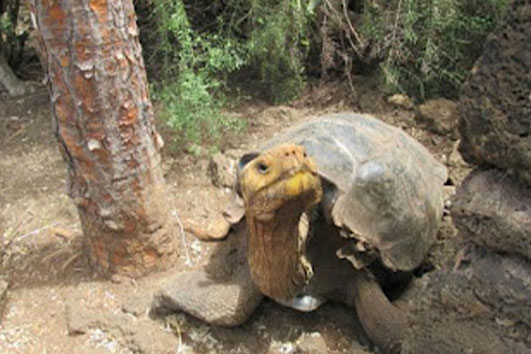
This is a great macro diving with an excellent chance of seeing sea horses, sea lions and eagle rays. Lunch will be served while transiting to Santa Cruz (3 hours). Travel by bus to the Santa Cruz Highlands to visit the giant tortoises in their natural habitat. Transfer to the town of Puerto Ayora. Dinner on your own in Puerto Ayora. Return to the Tiburon Explorer at 8:30pm.

Saturday: Baltra
Depart the vessel by 9 am. Transfer to the airport.