Galapagos diving is considered advanced. Currents at Darwin and Wolf can run from 1 to 5 knots and change direction, the water can be cool, and the best sites are in open ocean, so most liveaboards ask for an advanced-level certification and a solid base of logged dives, often around 50. For a fit, experienced diver it is very manageable, and the reward is hammerheads, whale sharks and marine life found almost nowhere else.
Knowing what you are getting into is half the preparation. Here is an honest look at difficulty, experience, water temperature, visibility and currents — so you arrive ready to make the most of every dive.
Galapagos diving in a nutshell
In a sentence: the Galapagos is advanced, big-animal diving in cooler water with currents — and it is worth every bit of preparation. The marquee sites of Darwin and Wolf, where the famous shark schools gather, are the most demanding and the most spectacular. If you are comfortable in current and have a solid number of dives behind you, you are in for the trip of a lifetime.
Galapagos Diving Difficulty: How Hard Is It?
Galapagos diving is generally considered advanced. The challenge comes mainly from the currents, which can be strong and can change direction, and from the open, exposed nature of the best sites. You will often descend quickly into blue water, hold position along a rocky reef while the action unfolds, and drift with the current. Good buoyancy control and comfort in moving water matter far more here than at calmer, warmer destinations. None of it is beyond a fit, experienced diver — but it is not the place to log your first open-water dives.
How much experience do you need?
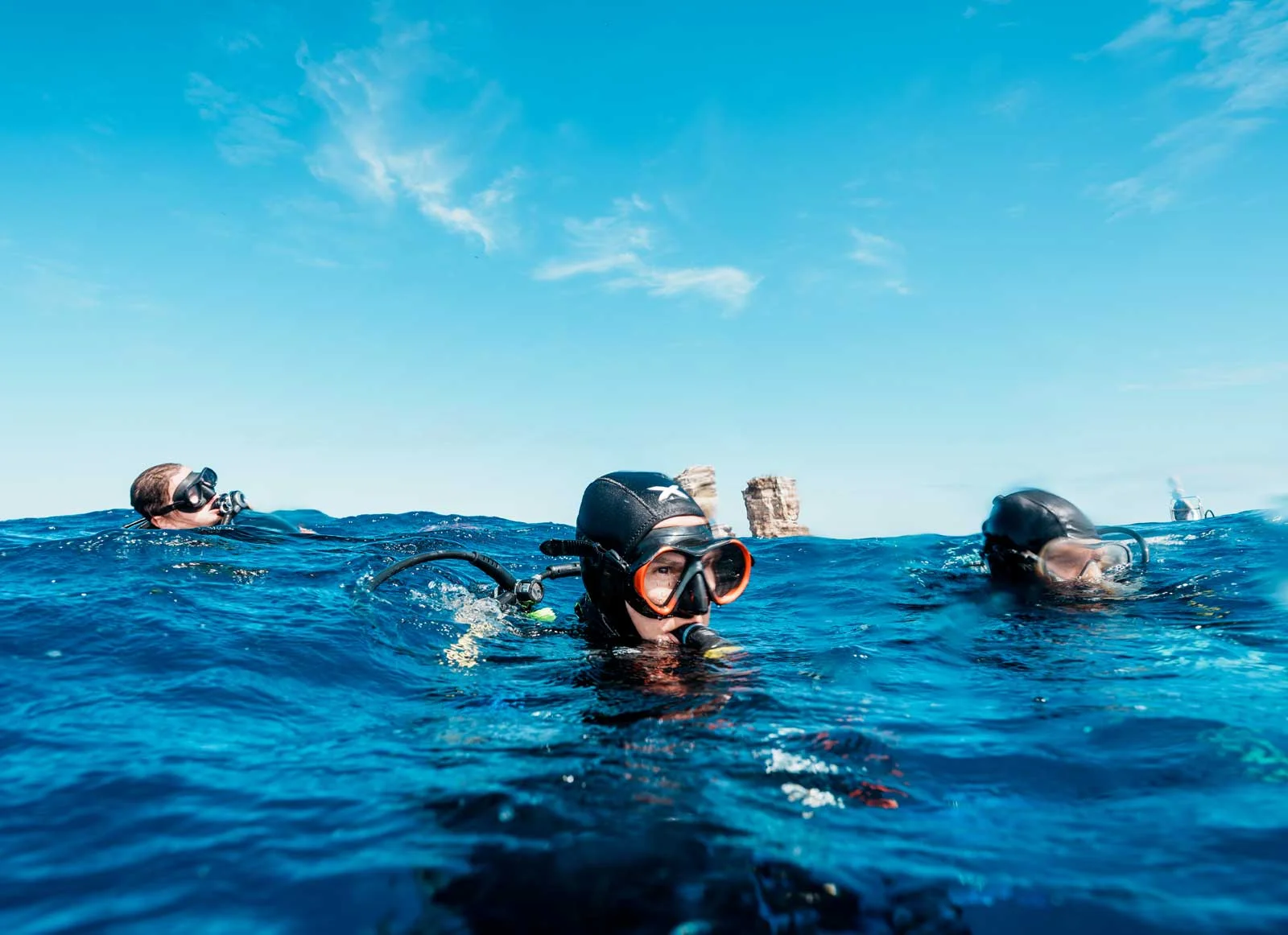
Most Galapagos liveaboards ask for an advanced certification and a solid base of logged dives — often a minimum in the region of 50 dives, and more is better, especially dives in current or cooler water. Experience with drift diving is the single most useful thing you can bring. If you are still building toward this trip, the best preparation is simply to dive more, in conditions that are a little challenging, until holding position in a current feels natural.
Water temperature and what to wear
Water temperature runs roughly 65 to 75°F (18 to 24°C) in the warm season (December to May) and 60 to 70°F (16 to 21°C) in the cool season (June to November), and it can be colder at Darwin and Wolf. Plan your exposure protection accordingly: most divers wear a 7 mm wetsuit with a hooded vest and gloves from June to November, and at least a 5 mm wetsuit from December to May. A hood and gloves are strongly recommended year-round. For the full season-by-season picture, see our guide to the best time to dive the Galapagos. Packing list? See what to wear in the Galapagos.
Visibility and currents
Visibility is generally between 30 and 80 feet — clearest in the warm season and sometimes reduced in the plankton-rich cool months, which is the same plankton that brings in the big animals. Currents at the dive sites typically run from 1 to 5 knots. Many divers carry a reef hook to hold position in the current while they watch the sharks, along with a surface marker buoy for drifting safely, and your guides will brief you on exactly how each site is dived.
What you'll see, and where
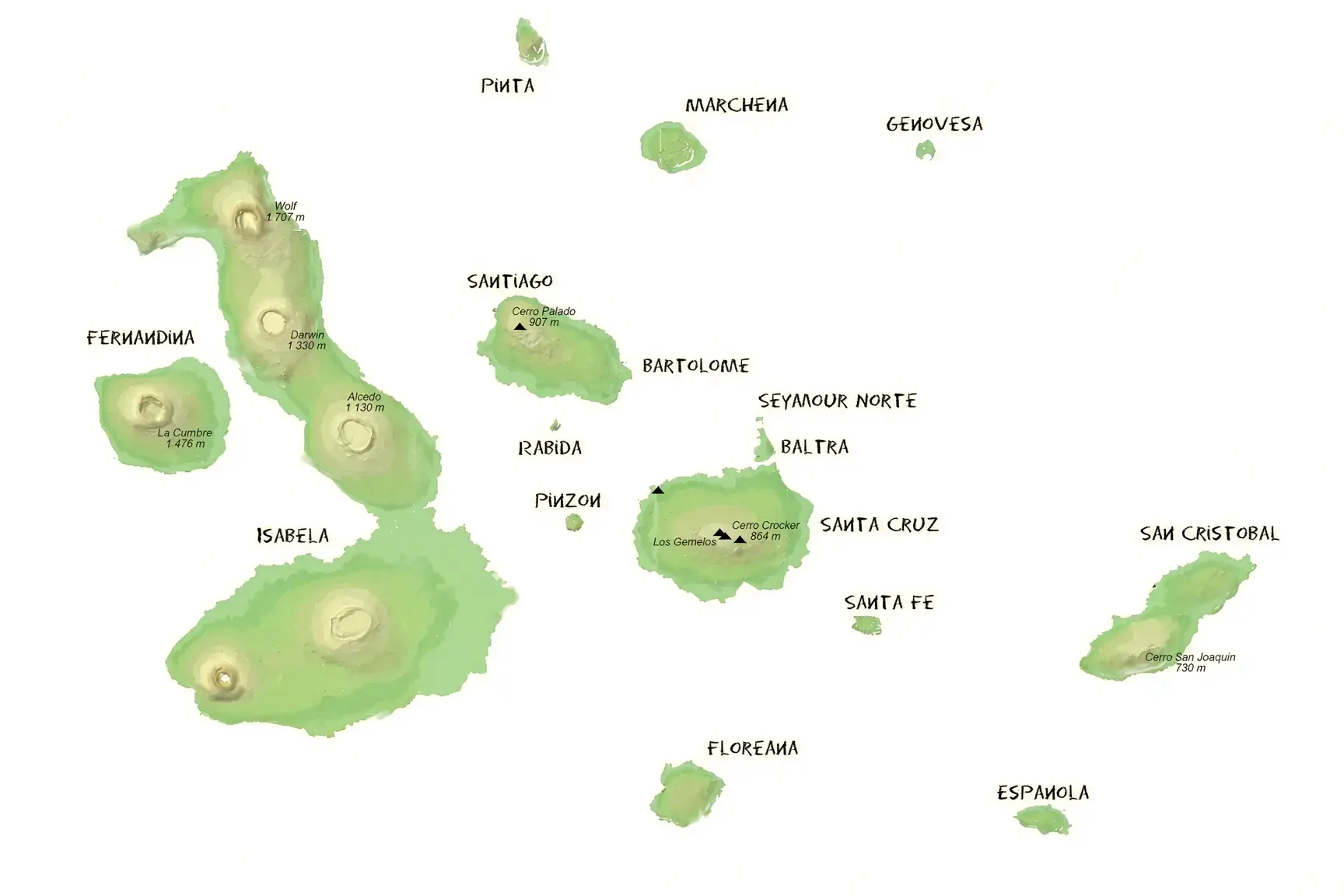
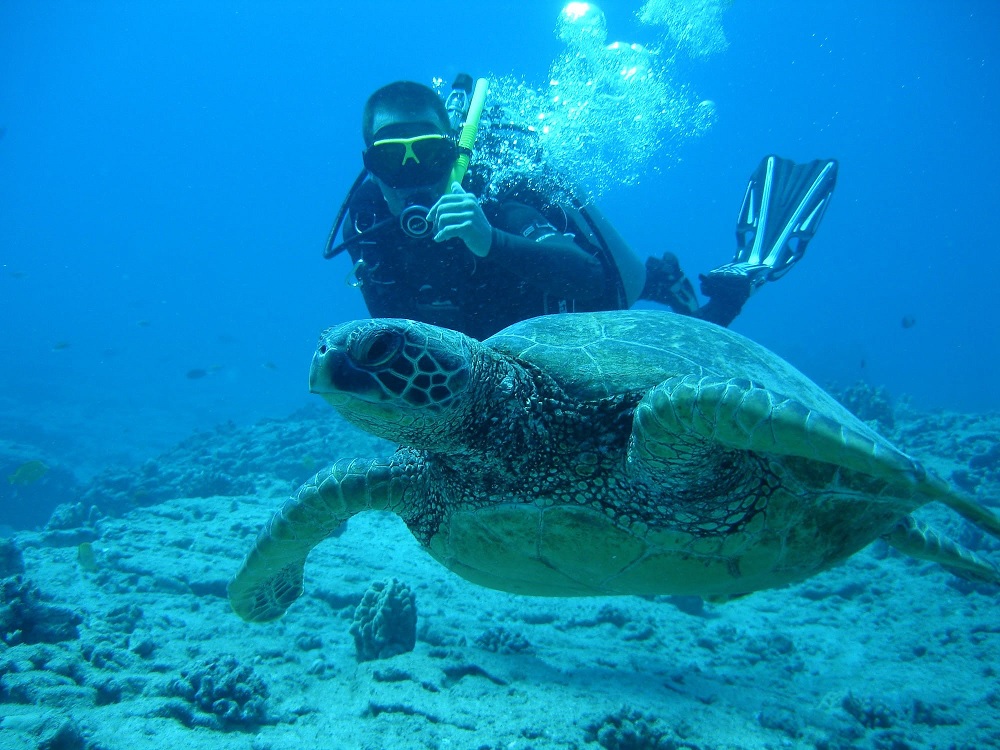
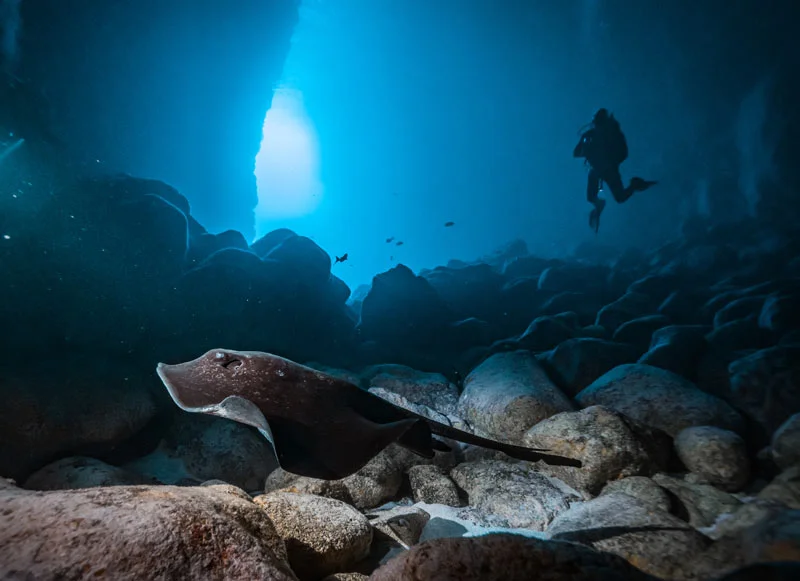
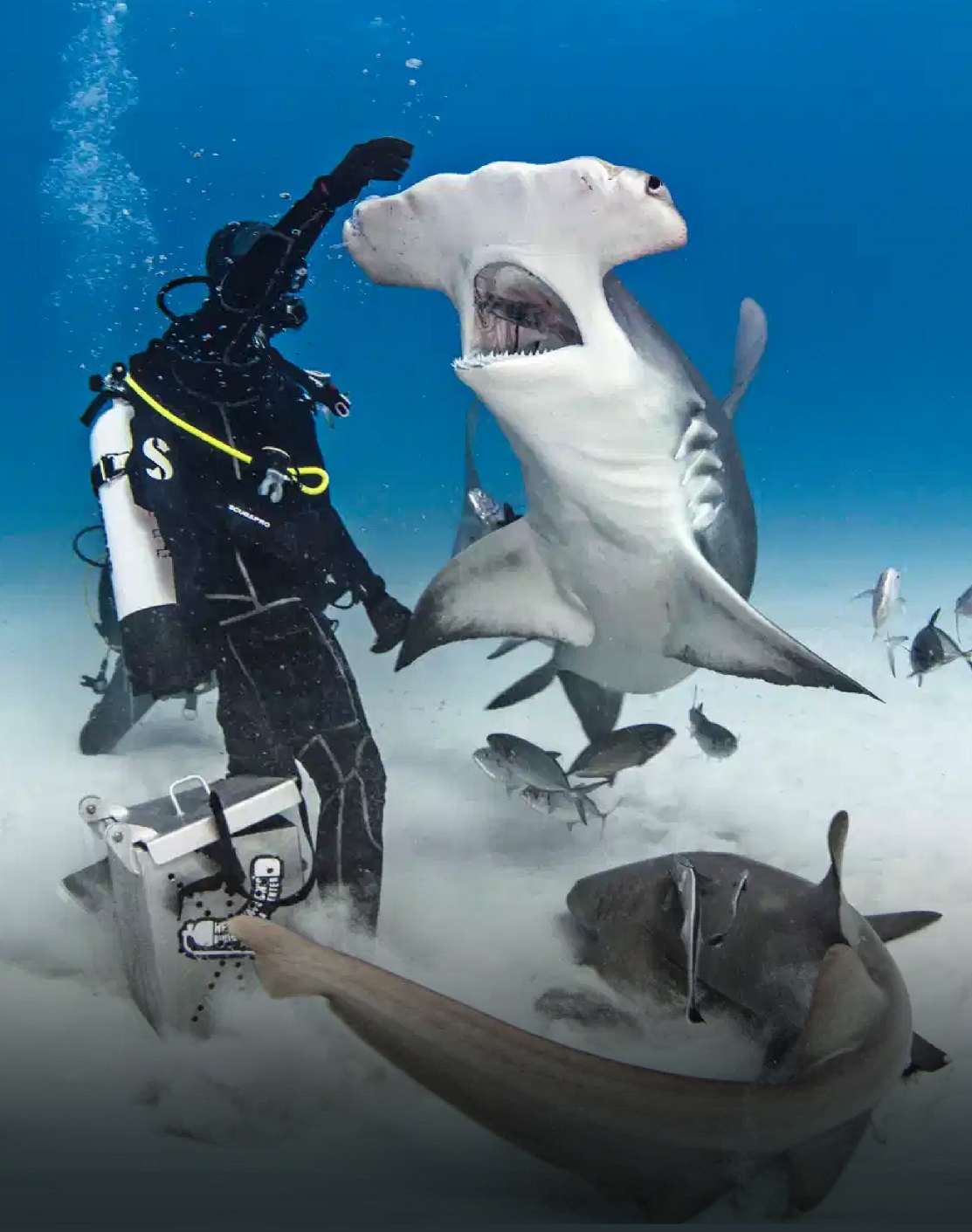
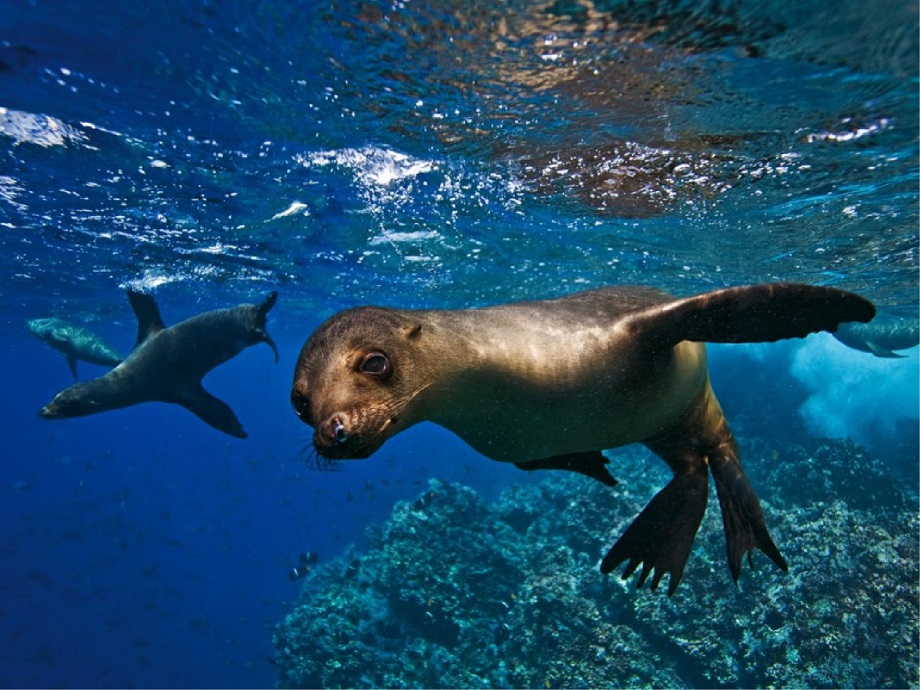
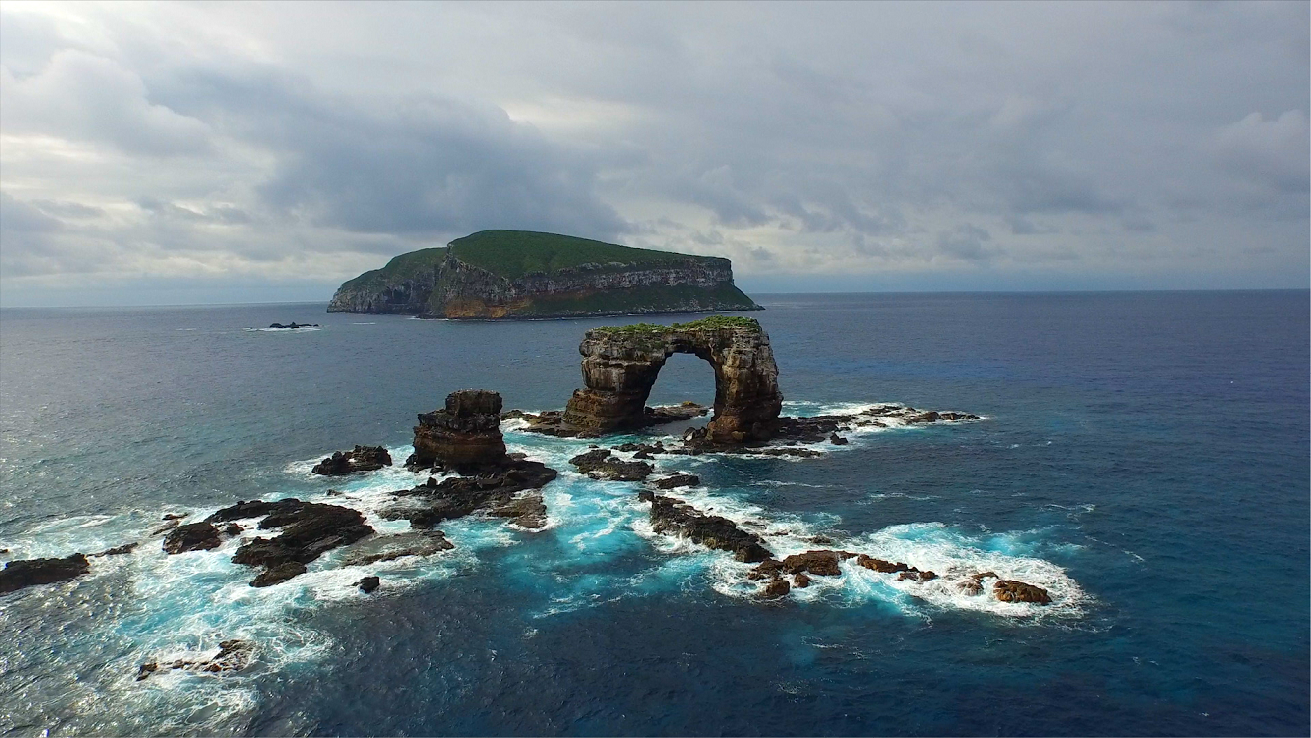
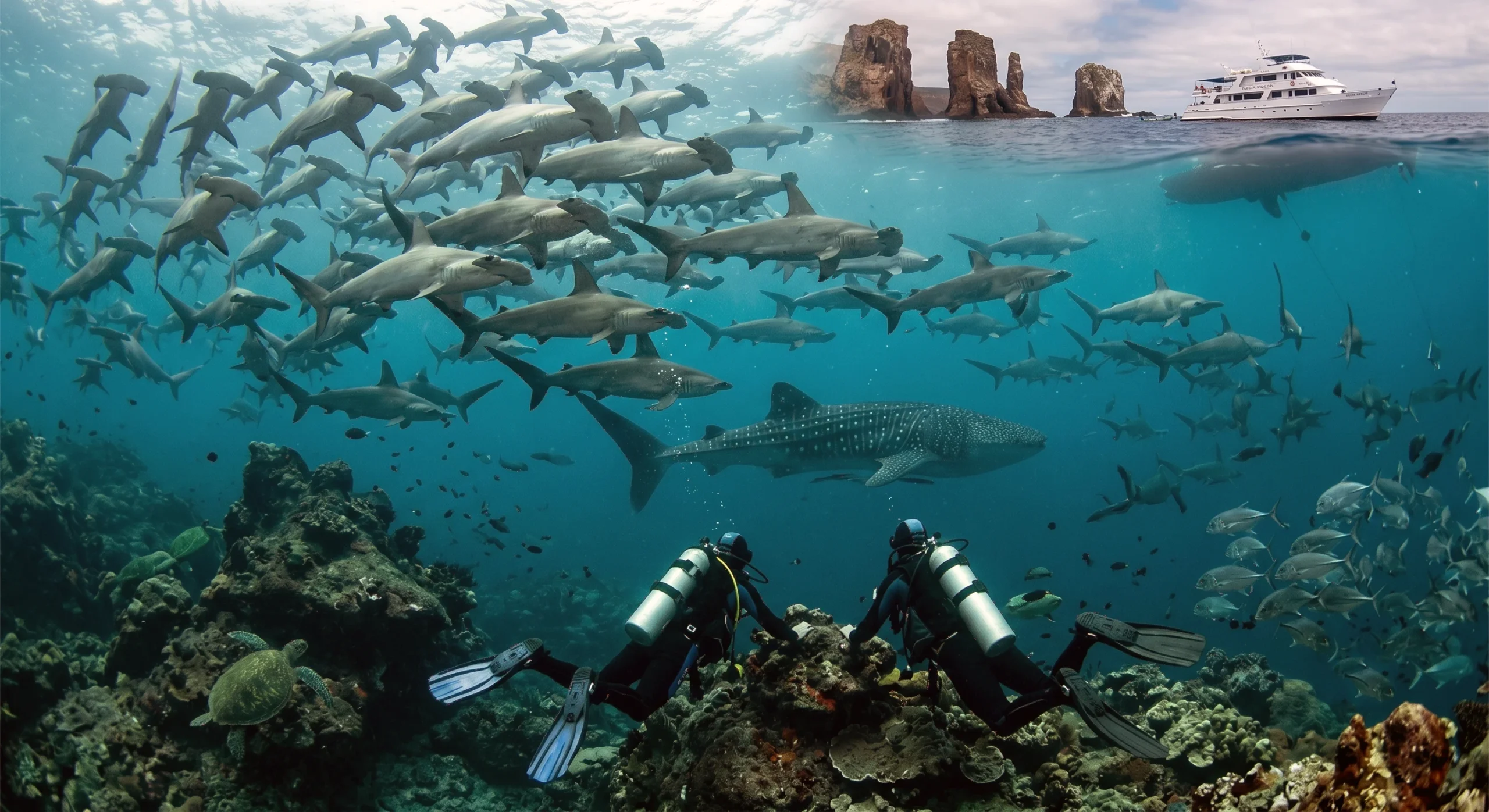
The reward for a little extra preparation is world-class marine life. Expect schooling hammerhead sharks, Galapagos sharks and, in the cooler months, whale sharks, along with eagle rays, turtles, dolphins and dense schools of fish. The greatest concentrations are at the remote northern islands, reached only by liveaboard. You can read more about the famous hammerhead schools and about Darwin and Wolf liveaboard diving.
Planning your Galapagos dive trip
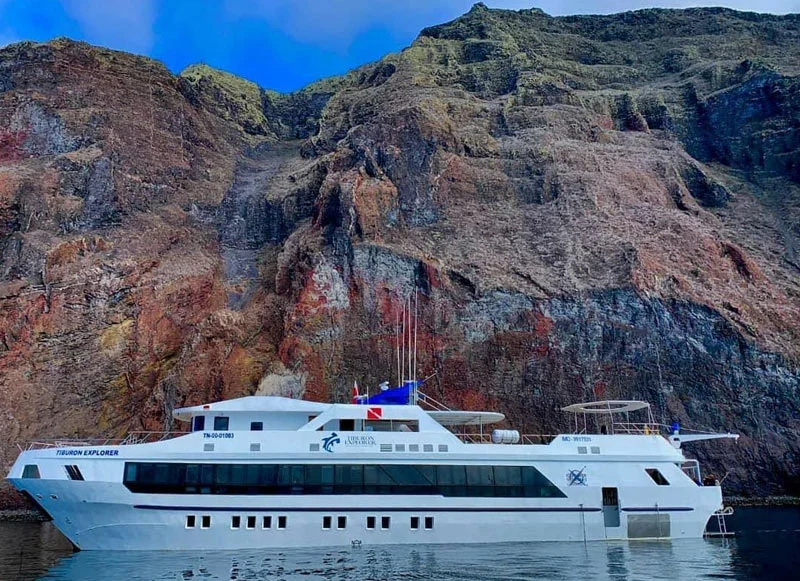
Because the best diving is only reachable by liveaboard, your trip is built around a week aboard. Packing is easy: light clothing for the boat, a warm layer for cool evenings and surface intervals, and your dive gear with the right exposure protection for the season. Before you fly, check the Galapagos baggage limits for dive gear. Bring high-protection sunscreen — the Galapagos sit on the Equator — and, if you are prone to seasickness, medication or patches from your doctor. Both of our liveaboards, the Tiburon Explorer and the Humboldt Explorer, run seven-night itineraries to the northern islands. As you plan, it helps to know the cost of a Galapagos liveaboard and what is included in the price.
Is the Galapagos right for you?
Honestly? If you are an experienced diver who is comfortable in current and dreams of big animals, there is nowhere better. If you are newly certified or want warm, easy, reef-lined diving, the Galapagos may be one to build toward rather than book right now — and that is no bad thing, because arriving with the right experience is what makes the trip unforgettable. For divers who are ready for it, the payoff is simply extraordinary.
Certifications and Specific Training


Ready for the dive trip of a lifetime?
See what a week at Darwin and Wolf looks like and start planning your Galapagos liveaboard adventure.
Frequently asked questions about diving in the Galapagos
How difficult is diving in the Galapagos?
It is generally considered advanced. The main challenges are strong, shifting currents and exposed, open-water sites, especially at Darwin and Wolf. Good buoyancy and comfort diving in current are essential. For a fit, experienced diver it is very manageable, but it is best once you have built up your dives.
How many dives do you need before diving the Galapagos?
Most liveaboards require an advanced certification and a solid base of logged dives — often a minimum of around 50, and ideally more, particularly dives in currents or cooler water. The exact requirement varies by operator, so check the specific minimum for your trip.
What certification do I need to dive the Galapagos?
Most liveaboards ask for an advanced-level certification (or equivalent experience) from a recognized training agency, plus a solid base of logged dives. The exact requirement varies by operator, so check the minimum for your trip.
What is the water temperature in the Galapagos?
Roughly 65 to 75°F (18 to 24°C) in the warm season (December to May) and 60 to 70°F (16 to 21°C) in the cool season (June to November), and colder at the northern islands of Darwin and Wolf, where upwelling brings up cold water.
Do you need a thick wetsuit to dive the Galapagos?
Yes. Most divers wear a 7 mm wetsuit with a hooded vest and gloves from June to November, and at least a 5 mm wetsuit from December to May. A hood and gloves are strongly recommended year-round, as the water can be cool.
Are the currents strong in the Galapagos?
They can be. Currents at the dive sites typically range from 1 to 5 knots and can change direction, which is exactly what draws in the sharks and big pelagics. Comfort with drift diving is important, and many divers use a reef hook to hold position.
Do you need Nitrox to dive the Galapagos?
Nitrox is not always mandatory, but it is widely recommended and offered on most liveaboards, as it helps you make the most of several dives a day. Being Nitrox certified is a good idea for a Galapagos trip; check what your chosen liveaboard requires or provides.