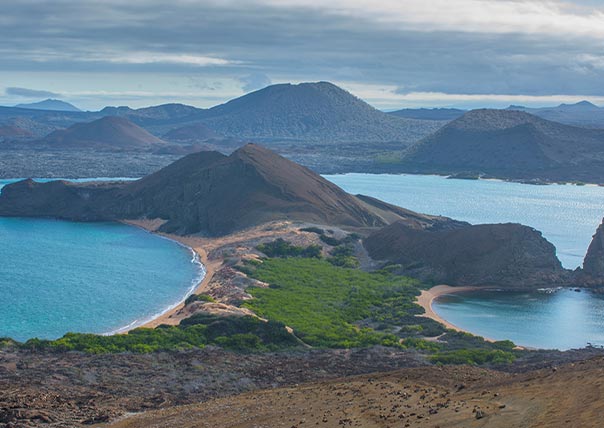
Geologists generally use two interconnected theories to explain the islands’ formation.
The Plate Tectonics Theory holds that the earth’s crust consists of several rigid plates that, over time, move relative to one another over the surface of the earth.
The Galápagos lie on the northern edge of the Nazca Plate (which drifts to the southeast), close to its junction with the Cocos Plate (which drifts to the north).
As a result, the Galápagos as a whole are moving slowly to the southeast.
Interestingly, the islands do not age uniformly either.
The western islands are younger, contain very active volcanoes, and are still in the process of formation, while the eastern and southern islands are older.
This phenomenon is explained by the Hot Spot Theory of Geological Formation.
It holds that deep within the earth, below the moving tectonic plates, certain superheated areas remain stationary.
Subsequently, natural forces such as wind and rain cause erosion, and the top of the volcano may eventually collapse.
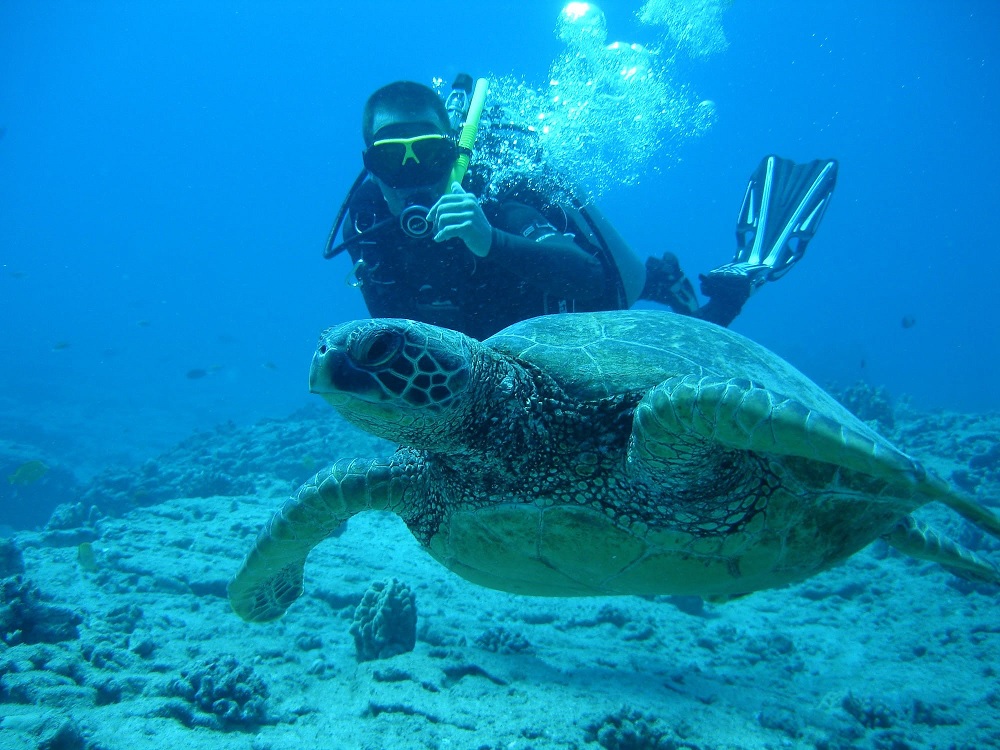
Those underwater volcanoes created the walls and pinnacles divers explore today — see them at the best Galapagos dive sites.