Not so lonesome George may have family!

| Updated on July 26, 2026
Not so lonesome George may have family!

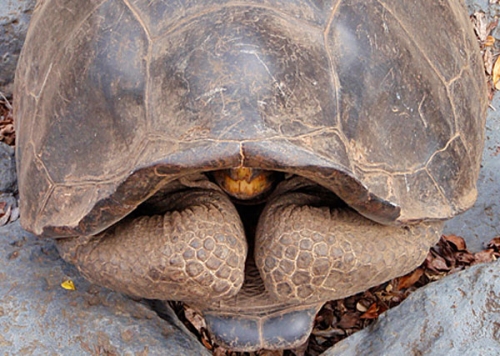
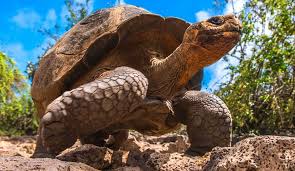
A team of researchers from Yale University have given us another reason to be thankful this holiday season.  As detailed in Yale News, they have found evidence to suggest that Lonesome George, the iconic Pinta Island tortoise (Chelonoidis abingdoni), who died this summer, may not have been the last of his species after all.  The team collected DNA from over 1,600 tortoises on the northern tip of Isabella Island, and found that 17 of those sampled were ancestors of George’s species.  All 17 were hybrids, but the scientists are hopeful that some of the younger tortoises may be the offspring of one purebred parent.

They plan to return to the area to search for members of George’s tribe, and to collect some of the hybrids to begin a selective breeding program.  Their hope is to produce purebred C. abingdoni tortoises after a period of 100-150 years, effectively restoring the species the world thought was irrevocably lost.  During the same program, they also hope to restore a tortoise species from Floreana Island, C. elephantopus, which was also previously believed to be extinct.

The same biodiversity that drives tortoise research makes the waters extraordinary — explore the best Galapagos dive sites where that richness is on full display.

Related Articles
Packing for the Galapagos made simple: light casual clothing, sun protection and what divers should bring for a liveaboard — plus luggage limits.
Galapagos time explained: the islands run one hour behind mainland Ecuador (GMT-6). What that means for your flights, connections and dive schedule.
People and language in the Galapagos: five inhabited islands, a Spanish-speaking population and multilingual guides on liveaboard vessels.
Tiburon Explorer’s itinerary

8 days/ 7 nights

Saturday: Baltra
Guests fly to the Galapagos Islands from Mainland Ecuador, arriving in the late morning (please make sure to land in Baltra not later than 11:30am). The dive guides will meet the guests at the airport between 11:00 am and 12 pm and escort them to the Galapagos liveaboard, Tiburon Explorer®. Guests will board the vessel, have lunch, organize equipment and listen to the safety briefings.

Sunday: Baltra North (2 Dives)
Equipment check, 7:00 and 10:00 dives.
Sightings include rays and schools of fish.
Afternoon North Seymour land visit. Walk the path around North Seymour Island to see the large colonies of Blue Footed Boobies and Frigate Birds. Sighting of Sea Lions and Marine Iguanas are also common. Depart for Cabo Douglas (11 hours).

Monday: Cabo Douglas (1-2 Dives)
Sightings include marine iguanas. Transit to Punta Vicente Roca.

Punta Vicente Roca (1-2 Dives)
Sightings often include mola mola, turtles and macro life. Transit to Wolf (10 hours).

Tuesday: Wolf Island (4 Dives)
6:30, 10:30, 2:00 and 4:30 dives. Sightings often include hammerheads, whale shark (in season), eagle rays, sea lions, Galapagos sharks and silky sharks.

Wednesday: Darwin Island (4 Dives)
6:30, 10:30, 2:00 and 4:30 dives.
Sightings often include hammerheads, whale sharks (in season) eagle rays, Galapagos sharks and silky sharks. 
Transit to Wolf Island.

Thursday: Wolf Island (3 Dives)
6:30, 10:30 and 1:00 dives.
Sightings often include hammerheads, whale sharks (in season), eagle rays, Galapagos sharks and silky sharks. Transit to Cousin’s Rock (20+ hours).

Friday: Cousins Rock (2 Dives)
6:30 and 9:30 dives.
This is a great macro diving with an excellent chance of seeing sea horses, sea lions and eagle rays. Lunch will be served while transiting to Santa Cruz (3 hours). Travel by bus to the Santa Cruz Highlands to visit the giant tortoises in their natural habitat. Transfer to the town of Puerto Ayora. Dinner on your own in Puerto Ayora. Return to the Tiburon Explorer at 8:30pm.

Saturday: Baltra
Depart the vessel by 9 am. Transfer to the airport.