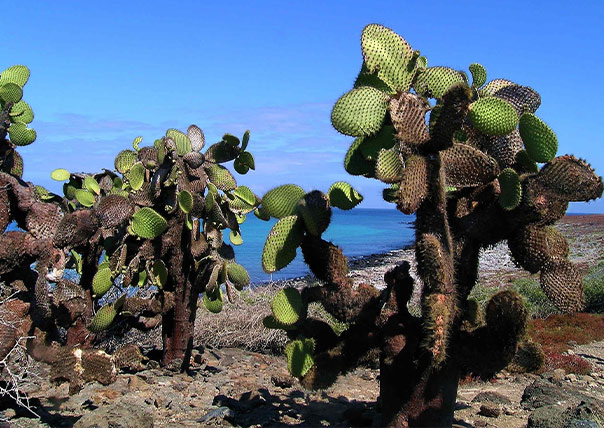
Changes in vegetation in Galapagos are also evident as elevation differs. The littoral (or coastal) zone is a narrow band along the coast. It is the home of those plants that are salt tolerant; mainly mangroves (red, black, button and white), which offer refuge between their extensive roots for juvenile fish and the protection between their branches and leaves for seabirds. Chamizo is low to the ground, offering shade for sea lions and a nesting area for pelicans and frigates.
Those coastal ecosystems shift with the seasons too — learn how timing affects what you’ll see in our guide to the best time to dive the Galapagos.