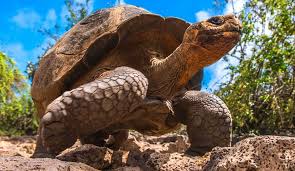
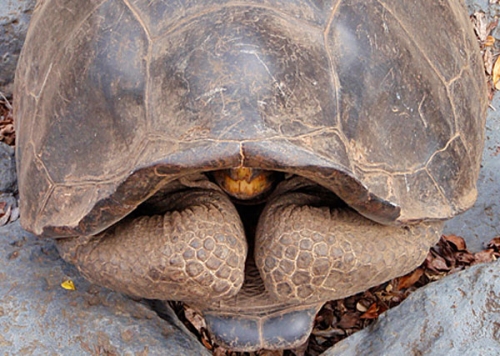
A team of researchers from Yale University have given us another reason to be thankful this holiday season. As detailed in Yale News, they have found evidence to suggest that Lonesome George, the iconic Pinta Island tortoise (Chelonoidis abingdoni), who died this summer, may not have been the last of his species after all. The team collected DNA from over 1,600 tortoises on the northern tip of Isabella Island, and found that 17 of those sampled were ancestors of George’s species. All 17 were hybrids, but the scientists are hopeful that some of the younger tortoises may be the offspring of one purebred parent.
They plan to return to the area to search for members of George’s tribe, and to collect some of the hybrids to begin a selective breeding program. Their hope is to produce purebred C. abingdoni tortoises after a period of 100-150 years, effectively restoring the species the world thought was irrevocably lost. During the same program, they also hope to restore a tortoise species from Floreana Island, C. elephantopus, which was also previously believed to be extinct.
The same biodiversity that drives tortoise research makes the waters extraordinary — explore the best Galapagos dive sites where that richness is on full display.